Introduction
AIs are opening their eyes and knocking at the door. Years of inactivity in the 60 years between the first and the second AI winter make the AI winter eventually come to an end, with 83% of companies surveyed having artificial intelligence as a strategic priority and 75% of them trusting artificial intelligence as the key to finding new customers and fresh business opportunities. Artificial intelligence is not a science fiction anymore. Fraud detection to effective hiring processes and estimating machine servicing, AI has today become a component of innovation in the workplace and its day-to-day applications.
Want to learn more? In this article, we will be dealing with the history of AI evolution, its functionality, and why you should make a case to your business.
What Is Artificial Intelligence in Simple Terms?
Artificial Intelligence (AI) is a term that is used to describe computer systems that are able to replicate some cognitive human activity, such as learning and reasoning. It is already changing the way we live the life we live by introducing such tools as ChatGPT. Without any superfluous terminology, explore its functions, weaknesses, and primary focus to come to know precisely what AI is.
3 main points to remember.
- Data is the main source of AI learning, the way experience is the main source of child learning.
- It has reasoning, prediction, visual comprehension and communication skills.
- The largest ones are machine learning, deep learning, and generative AI, each having its unique peculiarities.
What is artificial intelligence?
The image that readily crosses our mind when we mention artificial intelligence (AI) is one of a humanoid-like robot, possibly an emblem of a science fiction movie whose thinking was that he is a human being. However, it is much more than that, according to simple words. It is a branch of computer science that focuses on the development of systems that can imitate some of the intelligent behavioral processes that we normally relate to the human being or even animals. These systems to put it another way can reason, anticipate things, see the world they live in with their eyes, communicate with us, and meaningfully respond to their surroundings.
The most interesting thing about these systems is that they acquire knowledge mainly through a significant analysis of data. In this case, as an example, you decide to develop an AI system, which could identify cat images. This system will be fed thousands, or even millions, of cat pictures and other things. Slowly at a time, with sophisticated algorithms, the system will be trained to differentiate between what constitutes a cat, a dog or a pretty green plant.
It is possible that some may believe that AI is a recent technology, but you are mistaken! Its roots go back decades. The latest achievements in massive data mining, as well as the emergence of computing power, are what actually pushed AI to the front light. In other words, there are infinite resources at our disposal to run this data, and this enables us to conclude much better and much quicker.
It is a point worth making clear, though. The AI is as impressive as it is, but it is not a limitless technology. It does not have real perception of world. In reality, a system can flawlessly determine a cat image, though it does not know what a cat is, according to the human definition of the word. Moreover, the quality of the data is of great importance to the functionality of these systems. Poor information may result in poor outcomes. And one should bear in mind that such systems may be prohibitively costly to implement.
Why is artificial intelligence so much talked about?
In 2011 the general population learned about Siri the pioneer virtual assistant that can respond to the requests of the users in a direct and near-natural manner. With a general warm reception, Google, Amazon, and with a multitude of other technological participants were also not far behind them, creating their own conversational technologies, taking them one step further by expanding the distance in the interactions: after prompting a purchase, general knowledge query, to activate a light or an electronic device, etc.
Conversation with a machine is thus not new. But still, ChatGPT has been able to impress even the most experienced technophiles. It has reached a milestone: artificial intelligence does not need to be satisfied with recognizing and executing instructions any longer, it can also contextualize, reason, learn, and thus have real conversations in an almost immersive way. Nevertheless, until now we are not much closer to a dystopian situation when robots would be provided with real consciousness.
How AI Differs from Traditional Software
Generative AI is an artificial intelligence type that is the one discussed the most these days. However, what makes it different than classical AI?
This article will teach you the distinction between AI and generative AI, as well as, how the two technologies can benefit (or can benefit) you in your everyday life.
And in case you happen to be so curious and want to take it one step further you must read AI vs. Generative AI: Understanding the Two Concepts
Understanding the Basics: What is Artificial Intelligence?
Ideally, AI is the possibility of using a machine or computer system to handle procedures that would have otherwise needed human intelligence. This technology is based on the principles of programming systems that help to analyze the data, learn the experience, and make smart decisions all on the basis of the information created by human beings. The virtual assistant, e.g. Siri or Alexa, is the most popular application of AI, yet the technology can be used in many applications.
In fact, AI can transform many industries since now machines can solve complicated tasks and make a real-intuitive decision awakening far beyond mere automation. These applications entail different subfields and technologies including machine learning and natural language processing.
The Core Concept: Machines That Can Think and Learn
The moment you sit down to the computer each morning, and you enter this query in big language models: Summarize meeting minutes and clarify key information according to the main idea, an inanimate machine comprehends what you are saying and answers you logically and with the needed precision. The science behind this is that of artificial intelligence (AI) . But what exactly is AI? How does it learn to “think”? We are going to reveal it today and present you with the world of AI in simple terms.
Types of Artificial Intelligence
There are Three artificial intelligence types in capabilities..
- Narrow AI (Weak AI)
- General AI (Strong AI)
- Artificial Super Intelligence (Future Concept)
1. Narrow AI
Narrow AI also which is called weak AI is the only variant of AI that currently exists (narrow AI). The other types of AI remain hypothetical. It can be trained to complete one or specific job and in most cases at a faster and better rate than the human brain.
Nevertheless, it is not able to do anything other than what is given. Rather it focuses on a specific portion of cognitive skills and makes progress within that spectrum. More examples of narrow AI can be Siri, Alexa of Amazon, and IBM Watson. Even OpenAI ChatGPT can be classified as a narrow AI since it can only perform one task at a time, that of a conversation with a text.
2. General AI
Strong AI (also called artificial general intelligence, often abbreviated as AGI) is in fact hardly more than a hypothetical aim nowadays. He or she means that, through AGI, it is possible to use past experiences and capabilities to solve new problems in different settings without having to educate the underlying models by humans. This feature is what AGI can learn and do all intellectual things a person can do.
3. Super AI
Again, super AI, which can also be called artificial super intelligence, is purely theoretical like AGI. When realized, super AI would think, reason, learn, judge and have cognitive capabilities that would be superior to that of humans.
Application that have super AI capability will not just comprehend human feelings and experience, but will be capable of experiencing emotions, they will have needs, and be able to believe and desire.
Key Components of AI
The combination of science and computers results in the development of the artificial intelligence technology. It employs computers or machines controlled by computers and other machinery simulate, learn and expand human intelligence, perceive the surroundings, receive information and utilize the obtained knowledge to attain the ultimate outcomes. It has the ability to choose and to solve problems by itself.
The three important components of artificial intelligence include data, algorithms, and computing power. Artificial intelligence relies on the data as the basic element; artificial intelligence looks up to algorithms as its core: the computing power is the assurance of artificial intelligence growth and grants preferential conditions to the work of algorithms.
The technology of artificial intelligence is a wide-studied field and the primary aspects of this kind of study involve
- Computer Vision
- Deep Learning
- Natural Language Processing (NLP)
- Machine Learning
Computer Vision
Computer vision is an effort to ensure that computers can independently respond to their surroundings, and be able to perceive and comprehend this world using vision, just like human beings. It relies majorly on image capture equipment and computer systems to simulate visual organs in order to recognize, follow and observe, as well as manage the target. It then interprets and analyzes images to get useful information out of it. It finds many applications in the field of medical imaging interpretation, facial-recognition, surveillance, and self-driving.
Deep Learning
Deep learning is a form of machine learning which learns based on existing information and it is a new sub-discipline in machine learning. It approximates how the human brain interprets data (text, images, and sounds) using the principles of learning hierarchical structures, representation levels and abstraction levels by building upon the activity of the neocortex and imitating it. This enables machines to be able to get the same analytical and learning skills of humans.
Natural Language Processing (NLP)
NLP is a term that describes the act of processing natural language with computer intelligence in order to obtain viable information. The most challenging aspect of the artificial intelligence technology is having the ability to process text in the same way that human beings do. Machines, by learning speech, grammar, lexical structure and semantics, are able to comprehend human language, talk to human beings in natural language, and achieve natural language communication between human beings and machines, and finally have what we refer to as intelligence. Voice dialogue robots which are commonly used do so.
Machine learning
The necessary key to artificial intelligence is machine learning. It is the capacity of computers to enhance the performance of computers based on the data on the familiar conditions. Machine learning is created by training as opposed to explicit programming. Just like the human learning process, it spontaneously finds situations and tends to predates and make judgment about new situations upon using previous experience like the sales and inventory forecasting and oil exploration.
How AI Works (Simplified Explanation)
Artificial intelligence functions by utilizing computers to acquire facts on a scenario with the use of sensors (or human input). This information is compared by the computer to stored data in order to define its meaning. With such information, the computer will compute the possible actions it can take and thereafter predict the most effective action. Computers are mode specific, and they cannot perform general analysis on the problems that they are programmed to analyse.
Artificial Intelligence (AI) is a new technical field that investigates and creates theories, methods, technology and application systems to simulate, extend and expand human intelligence.
How to understand the relationship between algorithms and data structures?
Algorithms are based on data structures and data structures are based on algorithms. The reason behind the design of data structure and algorithm analysis is to come up with improved programs. A program consists of choosing a good data structure on which the task at hand is to be run and applying a good algorithm to it.
The raw material, in the case of a program, is the data. A program performs some calculations, or some processing which involves some data. These unstructured or loose data is arranged into a data structure and algorithms are run on these data structures. These structures, along with their design and choice should be combined with the data structure. In simple terms, data structure design entails the selection of a method of data storage, including the decision on whether the data in the problem is to be stored as data or using ordinary variables or other more complicated data structures. The store design involves a good algorithm design based on a good choice of storage design structure based on the data being processed in the actual problem. Since one data structure may be associated to several different algorithms, time complexity and space complexity should be applied in choosing the best algorithm. There will be very different algorithms associated with different Data structure designs.
How AI Improves Over Time
Artificially intelligent people are transforming our lives. It has already transformed the manner in which we shop, entertain as well as communicate with one another. With the opinions that the companies such as Google and Facebook are increasingly adopting AI, it will go on to revolutionize every sphere of our lives.
AI helps us fight climate change
There is also the use of AI in knowing and anticipating effects of climate change. As an example, AI can detect those areas that stand a risk of drought or flood, enabling governments and business establishments to anticipate such occurrences. One can also use it to simulate the way plants can evolve to embrace the conditions of increasing temperatures and aid us in creating more robust variants of farming. Some companies are also utilizing AI to build energy efficient buildings that minimize carbon emission in the environment and serve the human demands like air conditioning and heating. People are developing new material that can absorb or reflect heat so as to mitigate the impact of warming our atmosphere.
AI makes everyday tasks easier
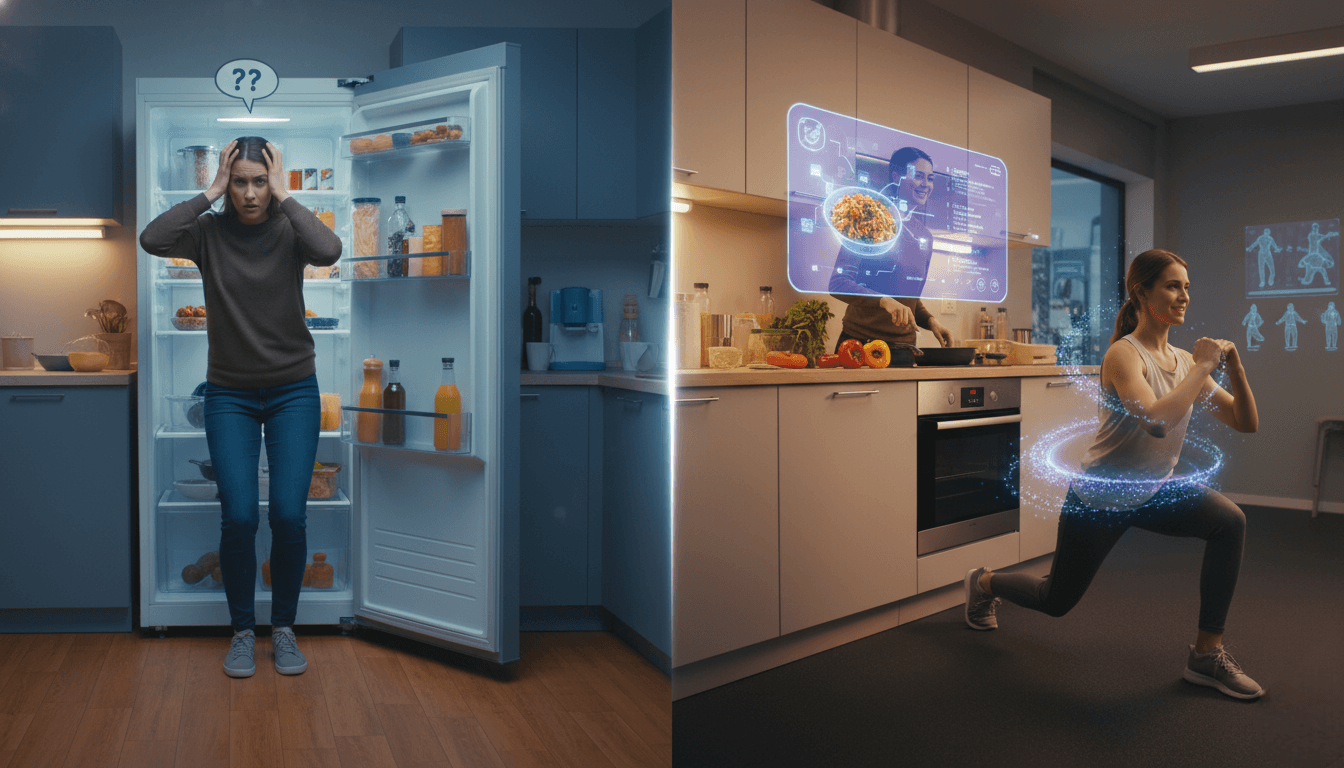
AI manages to make our lives better in a number of ways. It is applied to simplify the most common activities, like a booked flight or finding a restaurant or directions. It may also be utilized to tackle more complicated problems including the treatment of cancer or discovering new cure to illness. AI enhances our lives by enabling us to save time and energy when carrying out routine activities of which we are burdened with repeatedly. It liberates the time so that we can do other things that make our life easier.
AI helps us be healthier
AI is helping us be healthier. AI already made us active people, and we have only started working out to have our bodies in a good condition. AI is capable of making you exercise regularly, with new exercise programs, and having a custom training program to ensure that you are not bored. It is also able to check up your body health and update you that there is something wrong and what to do about it. It can also ensure that your diet is balanced as AI can give nutritional recommendations combining the information about millions of other people in the world who consumed the same type of food as you did, not mentioning that all kinds of aspects like lifestyle and age groups can also be considered. This will make AI save us the poor dietary practices and keep our bodies in good nutrition without necessarily using willpower alone!
AI creates new jobs and new industries
It should be mentioned that AI is a very developing discipline. Individuals in it are diverse in their specializations and as such, many are constantly developing new skills and perfecting the known ones. With the increasing trend of AI in our life, new jobs are created and others are enhanced. AI can make individuals work smarter and not harder, it can make them work differently. They are only limited by the number of various industries, which use some degree of automation nowadays, and repetitive processes in particular!
AI makes transportation safer
Ai can be used to create safer roads through lessening accidents and human error. Through AI, self-driving vehicles have sensors that detect any object like a pedestrian or even another car more quickly than their driver, and they are ever vigilant. These autonomous vehicles exchange information with each other and can access available real-time traffic information and this informs them about probable areas that may cause a collision and avoid it. Also, AI will enable us to live longer as it will minimize the risk of suffering injuries in a traffic accident or a medical error, and we will not get lazy when driving to a distant place!
The more data we collect, the better AI gets
The data you document the higher the level of AI. The key to the better AI is data. It is a learning machine: it learns by experience, and it considers everything that surrounds it as being part of the experience. AI is a self-educating program: once the system is trained, it has the ability to learn new things as well as make inferences regarding things that you have not yet taught it. This implies that when you are training an AI to do a task such as processing images or a speech recognition, the more pictures or sounds that you feed into your program (and that the images/sounds are labeled), the smarter it will be in recognizing what the images/sounds contain in future!
Artificial intelligence can simplify our lives, make them more enjoyable and also more productive.
Many problems may be solved with the help of AI. The AI is the mode of thinking which can be used in numerous situations. One can also know what it is to be intelligent through AI. Artificial intelligence may assist us to make superior judgments in our everyday existence by assisting us reflect on what those judgments indicate to us and others over the long run, however not in the near future, when such decisions present alternatives, such as time, money, and other assets. Arificial intelligence will be the future of of humanity relating with machines in more advanced ways such as using Siri or Alexa on your phone as a virtual assistant or even your personal robot who works with you and we will find out a great deal about ourselves and the way we best relate with such new technologies. The artificial intelligence is a strong tool that can be used to enhance our life in numerous ways. It can assist us to be healthier, to be more productive and to be more efficient and it is advancing in all these aspects daily. The greater the amount of data is gathered, the more AI can identify the patterns and make its own decisions. This is because, as long as we keep supplying it with information of what is happening in our world (and how it can do more things!), AI will keep on refining its performance as time progresses.
The Use Of Artificial Intelligence In Our Daily Lives
Artificial intelligence is with us in one way or the other on a day-to-day basis. To demonstrate this and to prove that artificial intelligence will move forward and evolve, we provide eight examples when artificial intelligence is applied into the everyday life. Let’s explore them.
How will artificial intelligence transform the world of work?
Many fantasies and fears are the results of artificial intelligence (AI), especially since it permits greater autonomy in particular work, thereby contributing to the world of work change.
It is a matter of a technology that will partially automate humanity, will turn some professions or even get rid of them, or at least, decrease the number of them.
Nevertheless, the most significant aspect of work changes is not that AI exists or is advanced in some way but rather how it is going to be applied in organizations and whether its implementation will increase the productivity or not.
There exist no fatalism when it comes to technology and work as a whole, only those choices and strategic paths of the leaders of organizations, both public and private, in a specific context (economic, social, technological, demographic, etc.).
These factors, combined, will have a great impact on work AI, be it through practices, content, condition or relations among colleagues, clients or users.
So, how exactly will artificial intelligence transform the world of work? Here are some answers.
Discover the pros and cons of AI in the workplace
Challenges and Concerns in Ai
New issues have been revealed as the AI technology unfolds. The issues of AI affect a broad spectrum of life of daily activities and business because AI is already implemented in numerous fields of life nowadays.
This article outlines the pitfalls of AI that businesses must know about and points that it must take note of to adequately implement AI. It is a book that every person should read who does not want to experience issues when using AI.
Companies need to be careful when using AI
Despite being convenient, one should learn the problems that come along with the use of AI. Even those companies that do not use AI with ill intent endanger the possibility of accidentally falling into trouble. Before launching and applying AI, one must be aware of the problems involved.
One should also learn about the pros and cons of AI and the various kinds they have.
AI issues that companies need to be aware of
Here are some key issues to keep in mind when using AI in your business.
Fear of Job Loss and Automation in AI
The suggestion of widespread job loss as a result of artificial intelligence (AI) by a former Google executive was recently ensured to be debunked as 100 percent nonsense by the executive, raising a commotion within the industry. The comments have been recorded as a potent response to the overall trepidation that most of the jobs could be automated by the rapid advancement of AI technology.
According to his profound knowledge of the reality about the real potential and paralysis of the AI technology, he believes that the existing mass of fear about replacing people with AI is overestimated. Specifically, he notes that AI cannot fully replace human creativity and complicated judgment, and that a companionate is at the core of the future of work (between humans and AI).
This quote is a lifeboat on a sea. Although numerous individuals have vague fears with regard to AI, it is worthwhile to have an expert viewpoint upon which the author has already been on the leading front in the development of AI. Nonetheless, one should not just remain optimistic but also come up with some real plans of how to adjust to the change. The AI will definitely change the labor market, and this does not imply that the jobs will be eliminated; on the contrary, it may introduce greater possibilities of value creation.
Why the best talent survives: Skills and adaptability
One of the former Google executives cited a number of reasons why skilled individuals will not be used up in the era of AI. First, he expounded that creativity and critical thinking are the exclusively human strengths and that AI will not be easy to replicate these two qualities impeccably.
Moreover, senior employees note that the skill of successfully working with AI tools can, to the contrary, considerably increase their productivity. This points to essentiality of not seeing AI as a danger, but as an instrument to increase his or her capabilities.
They also think that unique qualities of humans, interpersonal skills, emotional intelligence, and ability to solve complicated problems will still be very demanded in the future, and the mentioned qualities can hardly be substituted even with the development of AI.
This is a modernized form of the survival of the fittest. Similar to the Darwinian evolution theory, individuals that are able to adapt to evolving circumstances will live through. Gifted employees are not only capable of high-up to date skills, but also people who are able to learn and utilize the new technologies and redefine themselves. Instead of posing a risk, AI can make humans gain an exoskeleton and enhance their capabilities. The only difference lies in the manner of using this new tool.
The future labor market: Strategies for adapting to change
Scholars underline that the further education and education are going to be crucial in the labor market of the era of AI. People will have to be flexible and adapt to new technologies and trends because old time learning of a skill one and work life long is a distant past.
It is especially essential that the ability to work with AI should be developed. This involves a fundamental education in the technology of AI, data analysis, and having an ability to judge and use the output produced by AI accordingly. Another thing that can be done is to enhance competencies in the areas where we are able to apply our human attributes, which include creative problem-solving, strategic thinking and team leadership.
It is a new way of learning a language. The community will be entering the field where individuals in the knowledge of the “language of AI and the ability to communicate with it will be greatly appreciated. Nevertheless, to become an AI user, you must not only learn the skills, which is very simple, but have the critical thinking of the AI output and integrate it with your human judgment to generate value. This is just like the way musicians are able to combine digital technology to give rise to new music. The means is technology, and human creativity is the ultimate value.
The Future of AI in Workplaces
Artificial intelligence (AI) is changing the employment sector at a rapid feverish rate.The World Economic Forum predicts that the new technology will make 97 million new positions. They are not merely numerous new jobs. They are paying off.In April 2024, the median AI job will pay $160,056, as compared to 144,986 in the year before.
AI will not supersede you, but somebody who is competent to operate it will.digital work force might gain competitive advantage. This is the reason why it is more crucial to develop the appropriate skills to coordinate with AI agents. As a way to keep you at the forefront of the curve, we have listed these top 10 human-AI collaboration skills that you must have to be successful in your workplace.
These competencies will contribute to you building a productive collaboration with AI. You can be ready to work today and tomorrow and the years to come because when you know about AI, how it works, and what skills you need to achieve full success, you can gain knowledge of AI in the work environment.
The Benefits of Human-AI Collaboration in the Workplace
However, one needs to know why being skillful in working with AI will be so significant before delving into the skills of the future.
Some of the fields where AI can be applied to make work faster and more efficient include sales, service, marketing, inventory, and factory. As a matter of fact, industries that are susceptible to AI are increasing the labour productivity virtually 5 times faster.
however, future of work is transforming, and that does not imply that humans are totally substitutable. In an interview on Experts of Experience, George Hanson, director of digital strategy at Mattress Firm said that in his opinion, AI can assist human beings rather than supersede them.
The concept of AI is transforming the workflow to make it more efficient, effective, and reveal information that we could not have identified. Nonetheless, in the background of every AI success, there is a person and smartness. On the one hand, AI tools may assist in and even substitute some of the tasks, but it is human support that creates all the magic. People are the ones who develop such systems, work with them, analyze their findings, and end up with the final decisions. Behind the scenes, work places still depend on human judgement, creativity as well as the different perceptions that only we can offer.
This translates to you having enormous opportunity of standing out, improving on your skills and gaining outstanding results. Your own advantages and the power of technology can be used to reach extraordinary outcomes by creating collaborative relationship with AI, which will allow combining personal competencies with the potential of this technology.
Real-World Applications of AI in Business, Healthcare, and Education
Artificial Intelligence in Education
Artificial intelligence (AI) has a potential to respond to numerous significant issues in education, innovate educational practices in teaching and learning, and hasten the SDG 4 advancement. Nonetheless, the fast-paced technology progress also is bound to cause numerous risks and challenges as the speed during which these changes have been implemented has (to date), surpassed the speed of policy discussions and regulatory guidelines. UNESCO is also devoted to helping Member States to unlock the opportunities of AI technologies to realise the Education 2030 Agenda, yet the implementation in education must be based on the principles of inclusions and equity.
Artificial Intelligence in Business
The AI use in business assists to enhance productivity and efficient operation to enhance business value.
Machine learning, deep learning and natural language processing (NLP) are artificial intelligence technologies that utilize data in order to solve problems and make decisions that are beyond human abilities. The ability to forecast future behaviors and model possibilities on the basis of trends, like predictive analytics, is opening the power of AI and can unlock its current benefits in a practical form. Businesses have also been transformed by AI, whether in terms of day-to-day productivity or discovery of innovation. And, in the case of enterprising organizations, AI may push business activities to even greater levels.
The popularization of openIA generative AI, a form of content generated through deep learning, neural networks, natural language processing, and large language models to generate new content useful to general business (and individuals), was generated through the use of generative AI. This AI democratization has caused a flurry of AI implementation in business.
Generative AI already benefits its early adopters with material gains. Generative AI is applied in marketing, sales, product development, and service development by the average company (McKinsey 1 ). Organizations also think that this technology will cause a major or a disruptive change in the industries around the globe.
AIH: Artificial Intelligence in Healthcare
Artificial intelligence (AI) was the kind of future a couple of years ago; nowadays, it is a very tangible reality. When considering the issue of international healthcare problems, AI is not only being put to the test as a tool, but it is also a part of the discontinuation of how healthcare is provided.
The development of AI-based technologies provides unparalleled chances to transform the sphere of healthcare to make it more effective, convenient, and cost-efficient. With sufficient policies governing the adoption of AI, we have an opportunity to increase the equity of services, offer better care, and make sure that new technology, treatments, and medicines will serve the welfare of society, as a whole:
- The AI can be used in the effective distribution of healthcare assets. Predictive modeling is capable of predicting patient admissions and also in utilizing the hospital bed, personnel, and equipment. This will subsequently result in resources being offered at the point and time of greatest need thereby minimizing wastage and also enhancing quality of care.
- Some of the most acute issues in healthcare, including the increasing expenses, inefficiencies, and the need to provide a higher-quality care; can also be solved by AI;
- By avoiding and automating processes to streamline administrative procedures, AI can help lower expenses and shorten personnel time spent on tasks, including appointment schedules, billing, and eMR handling. This offloads the burden on the healthcare professionals and enables them to pay more attention to the patients;
- In terms of diagnosis, AI enhances the level of accuracy and facilitates timely detection, which can in most cases result into lower-invasive and more economical ways of treatment;
- AI-powered and personalized treatment plans can be used alongside conventional methods with the aim of providing more efficient treatment that targets the needs and desires of a certain patient better, thereby increasing patient outcomes and reducing the financial load on healthcare systems.
Practical applications of AI in clinical practice:
- Early seizures of sepsis: AI used in the intensive care unit is capable of identifying the potential fatal sepsis condition hours before clinical symptoms manifest, which can be treated immediately;
- AI-based breast cancer detection: Because mammography is used to screen breast cancer, AI devices can detect it in its initial stages, which is more accurate in many cases than human radiologists.
AI is changing the pharmaceutical market in the linear drug lifecycle, including drug discovery and development, pharmacokinetics, evaluation, drug manufacturing, drug marketing, drug approval, and pharmacovigilance.
In drug discovery, AI is used to speed up the steps by establishing targets and optimization of drug design. In drug development, AI enhances formulations and also promotes drug personalization. In pharmacokinetics, AI-based predictions are useful when deciding the best dosage, whereas in clinical trials, AI is useful in patient stratification, digital twins development, and trial simulation. AI can be applied in pharmaceuticals manufacturing with respect to automations and better quality checks.
Moreover, AI simplifies the process of approving drugs and performing pharmacovigilance because it allows submitting relevant data digitally and allowing burgeons to process the collected data to identify safety signals at the earliest stages. The advantages of these advances are great since they cut down time, costs, and make the research process faster, efficient, and low errors in clinical studies cut back time of production of safe and effective drugs.
This is significant: the EU pharmaceutical legislation reform:
- it offers the opportunity of submitting the applications electronically;
- it draws regulatory use of real-world evidence and health data;
- it explains the connection with medical equipment and other products;
- It brings in the idea of modified structures and regulatory sandboxes.
These progresses are building a regulatory environment in favour of AI-driven medicines innovation, allowing an increased innovation, successful data integration, regulatory decision-making, and product life-cycle management. Outside the clinical practice, AI is leading innovation in public health.
Predictive analytics are able to establish patterns and trends and therefore early interventions and prevention strategies can be observed. To illustrate this point, analyzing a variety of datasets based on the concept of AI can help predict disease outbreaks and predict and provide a timely and targeted response in the field of the population’s health, preventing the spread of the disease and minimizing its economic consequences.
In the implementation of AI in healthcare, one must remain focused on the main objective: the deployment of the revolutionary technology to provide equal quality care to everyone. Through the proper policies and inventions, AI can help create a healthier and sustainable future by all means.
How You Can Prepare for the AI-Powered Future
The appearance of artificial intelligence that generates some content made firms rethink their main competencies. The AI automation of tasks and increased information speeds up the work process and is modifying our working process. However, with all this progress, soft skills, the things humans must have, are more than ever becoming important.
Key Skills In The Face Of Technological Developments
Soft skills refer to a group of human and behavioral skills that can help one to be adaptable and a good workforce in the current workplace.
these, are the skills of subtlety, the skills of being able to negotiate complex situations better, either alone or together. She identifies them into three general categories:
Situational and behavioral skills: decision making skill, adaptation to the unforeseen and stress coping.
Relational and interpersonal skills: social intelligence, conflict management, feedback giving and receiving skills.
Emotional and cognitive aptitudes: creativity, curiosity, critical thinking and learning ability.
The entrance of the AI has destroyed these skills due to the changing of the relationship with information, decision-making and collaboration. Some soft skills are hence necessary to seize the opportunities provided by AI without falling into the trap of AI.
The quality of text, pictures, and videos created by AI may be impressive and high-quality, yet it may also result in errors, prejudice, and even fake news. Businesses and individuals have already been duped by deepfakes and even AIs have been accused of being biased in selecting data.
Embracing the skill of critical thinking is essential when confronted with AI where one learns to cognize information and understand the difference between the truth and the fiction. This can prevent the AI-generated content traps and allow one to make informed decisions.
In this regard, human role is to develop themselves not as rivals, but partners. The future that we will build by leveraging the synergistic capabilities of human and AI will be one in which technology does not only make our lives better and easier, but also adheres to humanity. The secret is in the importance of appreciation of unique human skills the so-called soft skills like empathy, creativity and moral judgment and ethical and responsible application of smart technologies.
The future will not be an era of AI, it will be an era of human-machines co-evolution both reciprocally enriching other to reach even more ambitious common objectives. We cannot avoid what is already in existence but rather just learn to live with it…