Introduction
More than ever, content making has been a fierce competition, but has it also never provided it with more opportunity. Coming out in the digital world that is already overloaded with written material, social postings, and short videos, more and more creators are finding that the human voice remains supernaturally powerful. It was believed that podcasting, as a hobby, has always been a niche activity of techno-savvy people but now it has evolved to become one of the most popular communication phenomena on the planet. It appeals to its audience during their morning workouts, in their gyms, and on their evenings of relaxing peace, easing right over the edges of daily routine, which cannot be reached by text alone.
In the case of bloggers and freelancers, podcasting is not another thing to fit into the effectively saturated content schedule. It is a true strategic tool, an opportunity to establish closer relationships with an existing audience but at the same time penetrate whole new circles of listeners. As you talk, people can hear your passion, your stutters, you are funny and you are convinced. Such fidelity develops credibility at a rate that the text seldom follows. This article will examine the reasons podcasting is a logical, great next step in anyone in the content creation industry, the possibility of starting it without breaking the bank and how to build a following of people who listen that can translate into actual professional outcomes.
The Rise of Podcasts in the Digital World
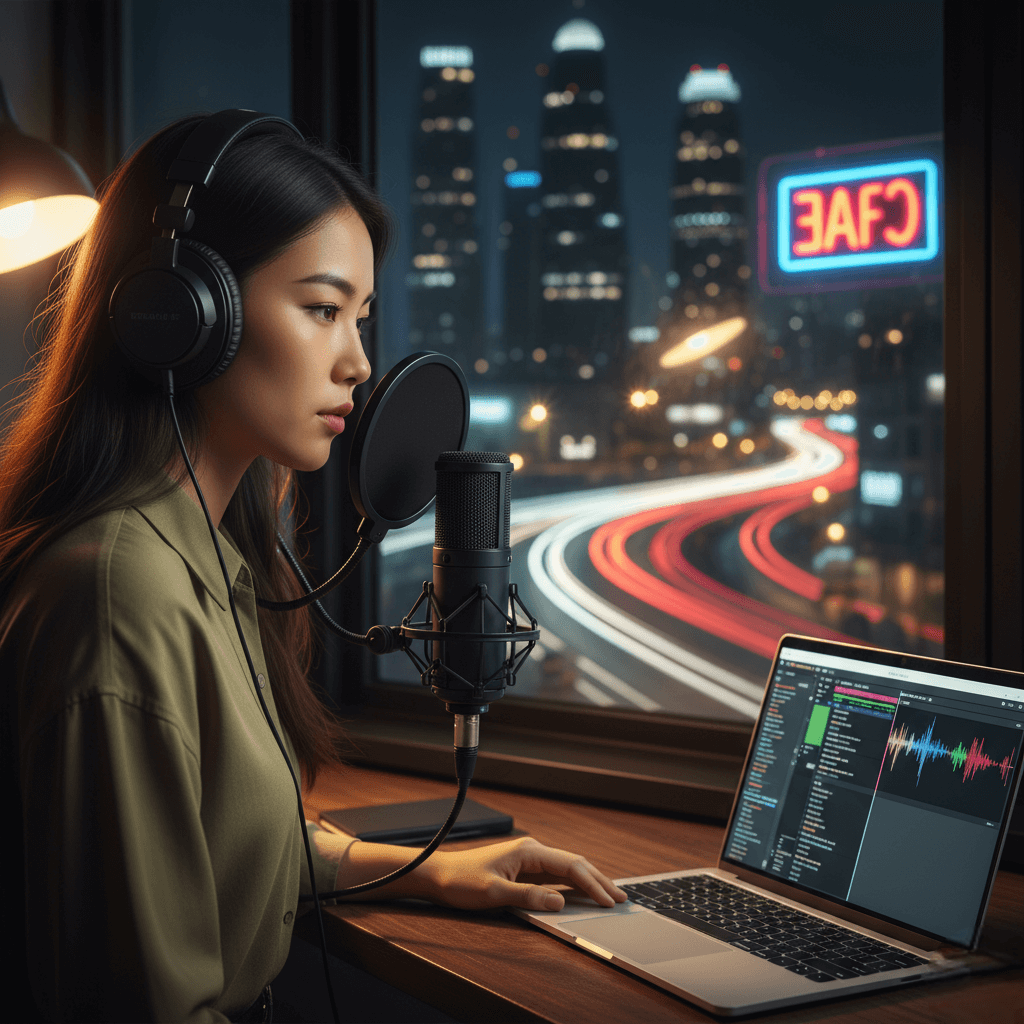
The podcast business has undergone phenomenal growth in the last ten years and this growth does not appear to be slowing down. Spotify, Apple Podcasts, Amazon Music, and Google Podcasts have millions of shows that touch upon all types of topics imaginable: true crime and pop culture, personal finance, entrepreneurship, and digital marketing. Millions of individuals are listening to new podcasts each day and tuning in on new ones every week, and audio content continues to emerge as one of the booming media classes in all corners of the globe.
What is the secret of this boom in popularity? It all depends on convenience. You can listen to any podcasts in the background unlike reading a blog article which requires your full attention or watching a video which requires you to be glued to a screen. Individuals are able to consume professional wisdom and captivating narratives during transportation, physical activities or meal preparation. This active accessibility provides podcasts with the peculiar advantage: they reach the audience at the time when no other types of content may do so. Besides, podcasting creates a feeling of closeness that is hard to experience with other media. When a host talks directly at your ears, especially over a duration of thirty to sixty minutes, you feel as though you are having a conversation with a well informed friend. It is precisely that intimacy that makes the podcast listeners devoutly devoted to the podcast and incredibly active
Why Bloggers and Freelancers Are the Perfect Fit for Podcasting

Bloggers and freelancers have a combination of skills which almost translates to effective podcasting. They are already very familiar with their niche. They have taken the time to determine their audience, what ails them and interests them and have created a content that is aimed at satisfying those needs. It is possible that the most crucial element of a successful podcast, which is equally considered the foundational knowledge, and the blogger and freelancers already have it at their fingertips when recording the first word.
In addition to being subject matter knowledgeable people, the two are seasoned story-tellers. Practical writing; be it in the form of blog posts, client reports or project proposals, develops an inbuilt capacity to structure thoughts, string concepts and narratives and pass ideas across with clarity. These are the exact abilities that make the difference between any interesting podcasts and dull ones. Mainly to freelancers, podcasting presents a direct marketing platform that does not need advertisement investments. The freelancer who is a podcast became a recognizable informed figure in their field rather than sending cold emails to clients or being lost in the sea of copycat freelance platforms. The potential clients learn about them by search, by word of mouth, and by organic exposure on the podcast sites and already have the belief in the knowledge that the host offers.
What Exactly Is a Podcast?
By definition, pod is an audio or digital series on a given subject or theme. Every episode is an independent bit of content (be it a single monologue, simply interviewing a guest, hosting the show with a colleague, or a storytelling segment/narration). The episodes are uploaded onto a hosting service and automatically sent to the listeners over apps and streaming platforms.
The mechanics are less complex than it may seem to most people. A podcaster produces the audio recording with the help of a microphone and recording software and makes minor editing in order to make the sound sounding better, then uploads the final file to a hosting service, which takes care of the dissemination to all major platforms. Whenever new episodes are published, the listeners are automatically subscribed and get it automatically. There are also two major types of podcasts, audio-only and video. The classic format is the use of audio podcasts which are the most usual. They are cheap to create, can easily be consumed in any device and can be easily edited. Video podcasts do especially well on YouTube where the two qualities of search and watchability could take off to exponentially increase the audience base. In the case of most beginners, it is more prudent to start with audio: the barrier to production is reduced, the learning curve is not as steep, and the main point of activity remains where it belongs, on providing a valuable content.
Why Bloggers Should Start a Podcast
Turn Written Content into Engaging Conversations
The written blog post is full of great information, but this information is presented in one way. The transformation of blog posts into podcasts increases coverage immediately, since it will become available to an entirely new channel of consumption. An article of tips on productivity turns out to be a cozy, personalarguish episode in which the host tells his or her own story, as well as the background to every tip, and makes abstract advice a real person with his tone and his energy.
This conversion process is as well a strengthening of the contents. When you are speaking out what you have thought instead of writing it in a page you automatically fill in the blanks, add context, and make things more human. Speaking can often bring out insights and links that were never brought out in the writing process and as a result, your podcast episode is more a reimagining of the original article as opposed to whenever you are reading it on the podcast.
Reach a Wider Audience Beyond Your Readers
Not everyone is a reader. A large segment of the population is actively inclined to listen to audio materials, and such individuals will never learn about your blog no matter how good your SEO can be, not that they are not searching through articles to read. Casting your podcast before this totally different group of people who may have never discovered you during your blog but are actually interested in what you are talking about and highly persuasive to your knowledge base. This growth in the audience brings a positive feedback loop. The new listeners of podcasts usually become bloggers, social media followers, and subscribers to e-mails. One episode of the podcast is consequently able to produce traffic and interactions throughout your whole online presence, not merely the podcast.
Boost Personal Branding and Authority

Personal branding refers to having a presence that is recognizable, trustworthy and memorable within your distinct niche. All these three attributes are combined to speed up with the help of podcasting. When your voice is heard on a regular basis, your listeners grow to know and be comforted with you to a level that can never be achieved by the most interesting written communication. Such personality, funny, passionate and your pure expertise is brought out in a manner that cannot be handled by text.
This is enhanced more by inviting guests to your podcast. The implication of having respected professionals in your field agree to appear on your show is that they have endorsed you to your audience which means that you are an acceptable and worthy voice to be listened to. In the long term, these associations make you a thought leader: someone that other professionals will respect, audiences will trust, and brands will desire to associate with. Such authority is not an instant thing because constant podcasting generates it gradually and in a lasting manner.
Repurpose Blog Content for Multiple Platforms (SEO + Audio Reach)
The possibility to reuse the same material in various channels at the same time is one of the most viable benefits of podcasting to bloggers. A podcast episode can emerge out of a single blog post. The episode may then be scripted down and utilized as further written material that has been optimized under SEO guidelines. The episode has important quotes which can be taken out and posted in the social media. The most interesting scenes may be edited into brief videos to be used in Instagram Reels, Tik Tok, or YouTube Shorts. The identical essence comes across the mind of people in search engines, sound devices, and social feeds, and multiplies its worth several folds without forcing you to create totally new concepts at all. This content multiplication strategy is one of the most effective techniques in the hands of a digital creator and garnering maximum exposure of any work that you produce
Why Freelancers Should Start a Podcast
Build Trust and Credibility with Potential Clients
Trust is all that counts in the freelancing world. Customers are not only contracting a skill set but also a human being to market their brand, work on their endeavors, and provide them with outcomes that have a bearing on business. Their spiritual question, which they constantly pose either knowingly or unknowingly, is: could I trust this person? That question is answered in a podcast in a very comprehensive and convincing way.
After a potential customer invests half an hour of time having you explain to him clearly, deeply, and with true passion, what your field is and what you can do in it, they walk away with a very positive sense of what you are like and what your potential is. Not only is there knowledge in your podcast but also there is communication skill, professionalism, and devotion to your profession. These are precisely what will turn some inquisitive search engine user into a customer. Even better, this trust-building is done on the backburner as you continue to work on other tasks, that is, your podcast will work on both sides at any time and you do not need to slog to produce the podcast on behalf of each and every listener.
Share Expertise and Position Yourself as an Industry Expert
Being good at what you do and being considered someone who is good at their trade is a big distinction between the two. The last one happens to many talented freelancers as they work in silence and do not publicize what they have learned. With podcasting, all of this has a different revolving axis. Having continuous episodes with practical and insightful content in your field of expertise will eventually make the market name you with expertise. Individuals begin referring their own friends and contacts to your podcast and those referrals are more effective than self-promotion ever is in terms of social authority.
Take the example of a freelance copywriter that hosts a podcast about the psychology of persuasion, the art of email marketing and what made high-conversion landing pages. Their authority is strengthened by each episode. Listening clients are not merely impressed, but they are informed enough on how deep the freelancer has knowledge in something and thus will be more inclined to be charged high rates. The podcast not only captures clients but better clients who have the knowledge of what they are paying.
Networking Opportunity: Invite Guests and Build Relationships

Freelancers benefit most of all through the use of podcasting, which is one of the most effective networking tools that are underused based on this purpose. Asking industry colleagues, prospective customer, and high-status people in your network to come as your guest on your podcast sets you in a setting that is more of an atmosphere of relationship building, less pressure. A podcast interview invitation will provide the guest with something of actual value, unlike cold email or networking functions: a platform, an audience and an offer to discuss their ideas with a new group of people. The ways in which these relationships have long-term professional value are much broader than the episode. When a guest liked the way they looked, they will recommend your services, request you to feature in their networks or refer customers your way when they require someone with your talent in their cases.
Use Podcasts as a Marketing Tool for Your Services
Conventional marketing is an ongoing process and it takes either money to run an ad, time to make cold calls, or effort to create social media content that will be forgotten in the feeds within hours. Another model is the permanent marketing of podcasting, which keeps bringing new customers and clients to a business even after an episode is released. An episode of a podcast that was recorded today can be found by a prospective client six months or two years later, and when they do find it, the reputation value work is already accomplished.
In every episode, you are able to refer to your services in a natural and authentic manner without necessarily sounding like an advertisement. A small word at the end of an episode, a fact reference to a project in a conversation, or a sincere suggestion of your own services in the case of the listener as a problem are minor details that anyone would find helpful as opposed to pushy marketing. Such organic nature of promoting your work sounds much better to the modern audience in comparison with the traditional advertising
Key Benefits of Starting a Podcast
In addition to the benefits to bloggers and freelancers, there is also a group of professional benefits of podcasting that are more generally applicable to any person ready to invest in the medium. One benefit that is the easiest to measure and the quickest to realize is the increased online visibility. Posting a podcast on several platforms at once implies that the name and the brand will appear in several different search platforms, both in the internal search of Spotify and the charts of Apple Podcasts, as well as in the search results provided by Google to embed podcasts. Every platform is one of the channels of discoveries as a new listener is able to find you without any promotion having spent zero money.
Your communication and storytelling is also enhanced through podcasting, which is useful in your whole professional life. Being able to sound clear, having your mind put together when there is pressure to make a recording, how to conduct guests in a manner that is graceful and most importantly how to sum up complicated issues in a manner that leaves the listeners happy is all practicable. The Masters of Podcasting who are freelancers are more successful in presenting clients and negotiating with them. The podcasting bloggers get to be improved writers as a result of speaking and writing, complementing each other.
Another way in which podcasting provides an income source where non-podcasters do not have it is the existence of income streams. When you have an audience size that is large enough, sponsorships will arise since there are brands interested in targeting your niche of listeners. The advantage of affiliate marketing is that since your suggestions have real weight among your loyal listeners, the marketing works better. Courses or coaching services and digital products can be sold directly to people who already have a great level of trust in you. The podcast itself can be begun as a free service, however, it can be significant in terms of downstream finances.
How to Start a Podcast Even as a Complete Beginner
Step 1: Choose a Focused Niche You Know Well

Your niche is the one decision that is most crucial in the beginning of a podcast. With a focused topic, one attracts a focused audience or a focused audience is much more loyal and involved as compared to a scattered one. With your podcast niche, you should want to discuss what you already write in your blog. As a freelancer, the niche would be determined by your experience and the kind of customers that you are interested in. The narrower and more focused the better as far as establishing authority and getting potential listeners to determine whether your show is right or not is much easier.
Step 2: Set Up a Simple, Affordable Recording Space
It does not need a professional studio to capture sound of professional quality. The two considerations that are most important are a good microphone and a quiet recording environment. Consumer-level USB microphones of such brands as Blue, Fifine, or Audio-Technica also offer high-quality audio at less than a hundred dollars, and some sound virtually the same as models at ten times the price. Recording and editing software In the case of recording and editing software, free software such as Audacity on Windows or GarageBand on Mac can entirely create quality audio of over a podcast. It comes as no surprise that when recording in a small, sparsely furnished room, or even inside a wardrobe with clothes, echo and background noise is automatically smothered without any acoustic solution whatsoever.
Step 3: Plan Your First Ten Episode Ideas
Prior to the recording of the first episode, list at least ten episode ideas. There are two purposes in this exercise. First, it makes sure that your chosen niche is deep enough to support a show in the long run. In the event that you find it difficult to come up with ten subjects, then you might have to expand your niche or change your angle. Second, it takes away the fear of the question: What am I going to talk about next, which is among the highest causes of surrender of most new podcasters in the first few weeks. The content roadmap ensures that you stay the same and consistency is the only surest indicator of podcast success.
Step 4: Choose the Right Hosting and Distribution Platform
The technical part of the distribution is considered the services of podcast hosting, which upload your audio files and automatically deliver them to the platforms of Spotify, Apple Podcasts, Amazon Music, and more. The most popular ones are Buzzsprout, Podbean and Popcasters with free or cheap entry-level features that are fully sufficient with new shows. Your preferred right hosting system will depend on your budget, your level of comfort with the technical aspect, and analytics and growth tools that you may require in the growth of your show. The majority of the novices can find that any of the big platforms are suitable to their needs during the initial stages.
Step 5: Record, Edit, and Publish with Consistency
In the initial stages of a podcast consistency is more important than perfection. Understanding that you continue to engage your existing listeners, periodic publishing schedule be it weekly, bi weekly, and monthly will remind your podcast algorithms that you are active and worth recommending to your listeners. The initial couple of episodes will not be your best, that is quite alright. With each episode you tape you get more relaxed behind the microphone, more professional in organizing what you are going to talk about, and more aware of what your listeners want to listen to. The actual creators who excel in podcasting are not the ones who wait until it is right: They are the ones who begin, to learn, and practice in getting better.
Common Fears and Myths About Podcasting

The majority of individuals who want to do a podcast only talk themselves out of it before they even record a word. The threats that hold them back are nearly always false as opposed to true. The most dreaded is that one does not have a good voice. This is a misconception about what listeners of the podcast desire. Viewers do not tune on to watch a host with a gorgeous baritone or an impeccably neutral accent. Their tune in is due to the host who knows their issue, talks with true passion, and provides content capable of helping them somehow. Virtue is much prettier than polish and authenticity is simply developed through practice.
The second myth which has remained intact is the myth of Podcasting being costly. This was back when only a decade ago, the cost of a decent recording equipment was thousands of dollars, and hosting service fees a high price every month. The barriers are considerably less nowadays. A decent USB microphone and elements of free recording software, a cost efficient hosting package would constitute the complete infrastructure to start a professional sounding podcast with very little initial investment. Even successful shows were constructed on less than dinner-out setups.
The third fear is the one that is likely the most emotionally touching: the fear that none will hear. All of the successful podcaster began with no listeners. The process of creating an audience is slow, depends on consistency and efficient value delivery, but it can and will occur with creators who stick to the plan when the initial figures are disheartening. The podcasters who abandon on episode five never discover what would have occurred at episode fifty. Those who continue to go on eventually find that growth often comes in spurts, and that their audience will be worth much more in the long run than a brief spurt on virality would have been.
Tips to Grow Your Podcast Audience Organically
The source of audience growth is the creation of great content, which can hardly do enough by its own. It takes specific promotion and relationship-building in order to get your podcast discovered and regular content development. The easiest place to start is by promoting every episode on the social media platforms. Posting episode highlights, quotes, behind-the-scenes, on Instagram, LinkedIn, Twitter, and Facebook makes your content visible to the people that are not podcast subscribers but who are genuinely interested in your topic. Another discovery point which creates the point of writing a short episode summary on your blog and having the audio player to read your show at a later time creates another point of discovery to your readers who may not be exposed to your show otherwise.
One of the most suitable and least exploited growth strategies is cross-promotion with other podcasters of related niches. Being a guest on a different show would have you exposed to an already established audience that is already listening to podcasts and interested in your topics. Hosting yourself enhances their audiences that belong to your community. Such mutually beneficial work relationships are known as organic growth, and some of the quickest that a new show can have.
Short-form video clips that you can create based on your audio and upload to Tik Tok, Instagram Reels, and YouTube Shorts have become one of the most effective discovery tools in the industry. One thirty seconds video capturing a thought-provoking clip or an interesting argument can access thousands of individuals who may never have directly searched your podcast. The next logical step is that those viewers considering the matter further will require the entire episode, which puts them into your podcast viewers. It is also important to engage those that already listen to you. Requesting feedback and asking questions about future episodes brings about the feeling of community which turns passive followers into hard sellers of your show.
Real-Life Scenarios That Show Podcasting Works

General guidance on the usefulness of podcasting turns into so much more compelling when it is shown on tangible examples of how even real artists have utilized the medium to change their own lives and careers. Take the example of a travel blogger who has worked years to develop a substantial following to their specific and insider destination guides, and low-cost travelling advice. Her blog positions highly in numerous search engine queries, and she has been at a stalemate given that the travel blogging industry is saturated with bloggers. She initiates a podcast during which she narrates the experiences behind her travels: the accidents, the ensuing cultural experiences, the friendships, which she has made in her hostels and overnight trains. The presentation of story makes the listeners interested since they had not actually sought a travel blog, but were interested in reading a good adventure story. Such listeners start to visit her site, read her tips, and choose to distribute her information to personal circles. Her podcast gives a new life of a blog that was no longer growing.
Take at this point a freelance web designer who is a great technical offering but cannot stand out in the world of talented web designers. He then initiates a podcast on the topic of the business aspect of web design: how to communicate with clients about their budget, how to tactically set prices, how to develop a portfolio that sells, and how to avoid the pitfalls that waste time and money of the designer. A small business owner hears multiple episodes on his way to work, is well impressed in the skills of the designer as well as his speaking style and contacts him to hire him in order to build a large website. The podcast did what no amount of cold emails could have ever done, it established some sort of trust before the discussion had even commenced. These situations are the natural outcomes of value-based and regular podcasting in the long run.
How a Podcast Complements Your Existing Work
Among the most comforting factors about initiating a podcast is that it applies no pressure regarding one having to quit or ignore his/her current job. To bloggers, a podcast is not an alternative to written material, but a companion that will strengthen and make the entire content machine more stable. In the case of freelancers, a podcast never serves as a distraction of the work with clients but a bet on the professional image that will draw more profitable clients in the future.
The correlation between blogging and podcasting is indeed synergetic. Blog posts give you such well-organized, searchable, everlasting information that would make your site available to people via the search engine. Podcasts are the warm, personal, building a relationship, which transforms visitors into loyal members of communities. The medium makes each other stronger and those creators who use both make more out of themselves than those that use either one exclusively. In the case of freelancers, the podcast is their living portfolio, and each episode is an update. A statical portfolio site presents potential clients with a visual image of what you have accomplished, a podcast presents them with the picture of who you are, a thinker, a communicator, and what you could do to meet the challenges in the practice you are in. Such continual showing of your competence is much more compelling than any portfolio could be.
Each episode you tape, each interview you give, and each listener that listens in makes it part of a professional identity that increases in value as time goes by. The small and unsure podcast you launch today can be traced to the one you will run in two years, dozens of well-considered episodes old and a community of committed listeners around you, which will prove to be one of your most powerful business tools ever.
Every successful podcaster was once a beginner the only difference is that they chose action, not excuses, before getting started.
Conclusion

Podcasting is not a phenomenon that would disappear when another new platform is introduced. It is the core change in the way individuals are getting information and developing a new relationship with creators and experts that they believe. Voice is personal. Voice is direct. Emotion, credibility and touch can be better conveyed by voice than ever by text on a screen. To bloggers and freelancers, entering into this media does not only present an opportunity to have another channel of distribution. It is an opportunity to demonstrate to the world what you actually are, an opportunity to build the type of trust that will turn simple-followers into paying customers and true fans, and an opportunity to leave behind a professional heritage that will well serve even long after the piece of content is gone by.
If you start today, tomorrow you too could be among those creators for whom opportunities open their doors.
Entry barriers have never been any better. The prospective audience has never been bigger. The software used to record, edit, host and broadcast your voice to the world is free, cheap and available in most instances. The choice of starting is all that still stands between you and your first episode. Start simple. Choose a topic you care about. Take a microphone, be honest and helpful in your speech and post what you create. Each episode will be superior to the previous one. All your listeners will be people who have really benefited in their career because of you. And once the habit, the sincere, constant application of that, in time you will, by your voice, have one of the most valuable things you ever possessed made.