Operating a business in the modern world of globalization congested with digital devices and hardcore operations takes much more than effort and good will. It requires powerful, carefully selected instruments, which are precise as far as operations, cooperation, client interaction, and data processing are concerned. In the further on 2026, to remain competitive it is necessary to use software that will help them become more productive, make smarter decisions, and provide their team (as well as customers) with better experiences.
The slew of digital items that can be used by the contemporary business has never been as strong or diverse. The problem is not to find tools that will fit you but to find the ones that work, those that can truly fit into your workflows, scale, as well as your growth, and bring some quantifiable value.
You may require software to manage a project, communicating with your customers or colleagues, or to perform data analytics: to spend enormous amounts of time and money on this issue, it is better to select the appropriate tools in the first place. The intelligently composed technology stack does not only complement any existing processes. It kills bottlenecks and you are able to put your team to work on what is actually driving the business.
This list is about the top ten digital marketing and enterprise management tools that every business organization must consider in 2026. All the tools have been chosen on the basis of their functionality, effectiveness in use, scalability, integration features, and their general cost-effectiveness to enterprises that are working in a competitive environment. Together with the comprehensive analysis of each platform, you will receive the realistic tips on how to select the tools which would suit your case or situation best.
What is a Digital Marketing Tool?

It is worth taking a moment to define a digital marketing tool before getting down to the individual platform and see why the tools have become such a focal point in business success.
A digital marketing tool is a computer or web-based application or a platform that assists companies to advertise their services or products over the internet. The tools can be helpful in a very extensive variety of activities such as content creation, paid advertising, social media management, search engine optimization, email marketing, website analytics and lead-generation. They reduce and streamline the complicated and time-consuming bit of marketing and enable a team to work more productively, utilize data better and more effectively reach their target audiences.
The digital marketing tools have increased tremendously in the last decade. Email, CRM and analytics will often need to be managed in one unified suite as opposed to separately on a case-by-case basis. The resulting intersection ensures that it is much simpler to be consistent in marketing and relate data between various touchpoints into a consistent understanding of customer behavior.
To take one example, services such as Google Analytics 4 would offer in-depth information on how visitors navigate your website, which pages the visitor spends the most time on, their point of exit, and what sources of traffic are producing the most valuable forms of conversions. Others such as HubSpot have gone a step ahead to link website data with CRM data that enables companies to develop customer relationships via automated email marketing and personalized outreach. In the meantime, such tools as Landingi make it simpler to get built landing pages that convert it into qualified leads, so that every dollar spent on advertising returns harder.
Using the appropriate mixture of tools and combining the tools carefully, businesses are capable of developing the marketing and operations ecosystem that is strong and efficient. The outcome is the appearance of the campaigns that would amplify the presence of the brand, create meaningful engagement, lead to steady conversions, and eventually accomplish improved growth results.
What Makes a Digital Marketing Tool Worth Using?

All tools purported to answer your problems are not necessarily going to do so. Prior to violating yourself to any platform, consider it against a set of criteria that the most viable instruments should meet.
The factors that are much more crucial than the businesses have thought during the buying phase are ease of use. An interface that overwhelms or has a steep learning curve will consume time, and generate friction, particularly in the on boarding process. The most appropriate tools are easy to use such that within days, the teams can go on using them productively as opposed to weeks.
It is also important that it can be integrated. A new tool that does not support the current system has no effect, and rather, generates data silos in most businesses that already have a number of tools in use. The best tools are those that are integrated with the rest of your technology stack, which means that none of your data restrictions are confined to a single platform and that you do not need to manually input such data.
Scalability is a factor that begins when you need a right kind of tool to extend with your business. The same solution that could be a good fit in an organisation with ten employees would be a slow down when the organisation reaches a hundred. Enterprise-oriented platforms should be chosen at the outset to avoid the painful and expensive migrations.
The last ones are support and reliability. Whenever the critical tools become erratic, the quality of the vendor support might turn into a small inconvenience and a potential cause of a significant operational crash. Give a priority to those tools that have receptive and informed customer service.
With these criteria in mind, here are the ten tools that stand out most clearly in 2026.
Here are the top 10 tools every enterprise should consider using in 2026 to thrive in a competitive landscape.
Landingi: High-Converting Landing Pages
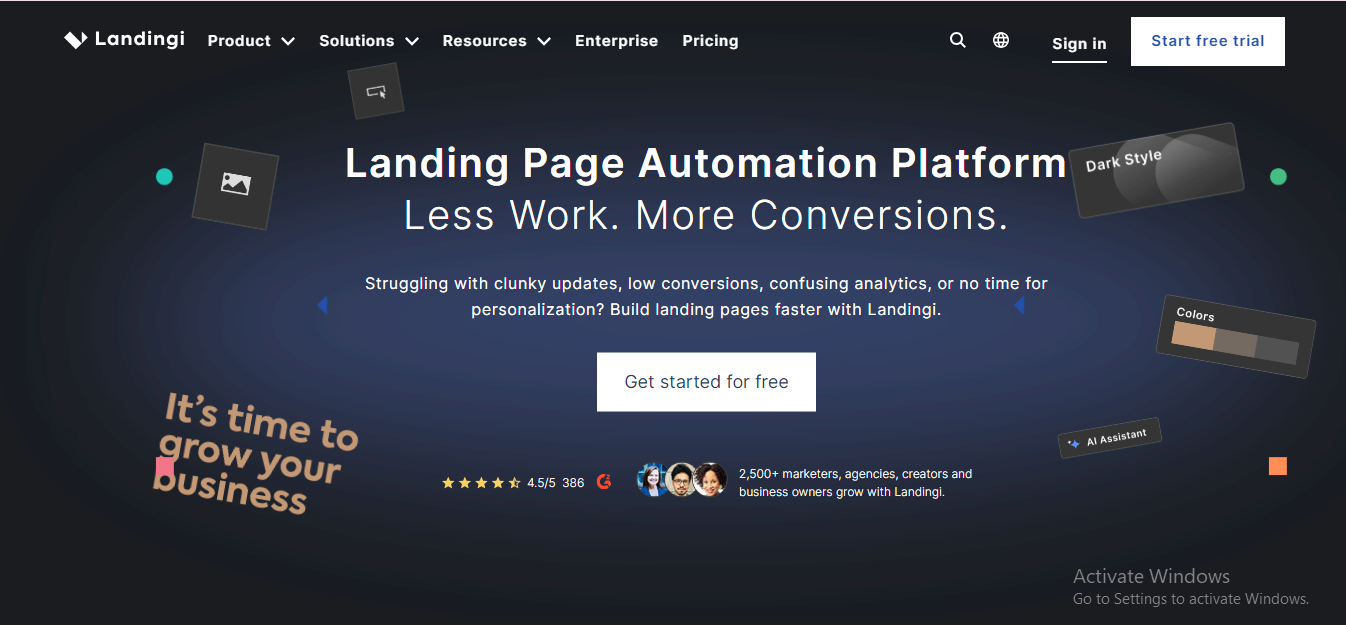
In this list, Ladingi takes the first position due to the disproportionate contribution it can make to the recovery of a company in paid advertising. Although much of the tools included in this list can enhance internal processes, Landingi specifically tackles an element of digital marketing that is exceptionally expensive, specifically, the traffic that fails to convert.
The site enables companies to create professional and highly converting landing pages with no technical or design skills or information. It has a drag and drop editor that is clean and available to allow marketers design, test, and publish pages within a comparatively short time without the services of the developer. This speed bears a lot of weight in any paid advertisement, as fast testing leads to a direct increase in campaign performance.
The actual advantage that Landingi has is its included conversion optimization package. The A/B testing is used to allow teams to run parallel versions of a landing page to decide the headlines and buttons, or pictures and form arrangements that seem to be the most favored. Conversion tracking helps to get a clear data on the pages and campaigns that produce the highest number of leads and thus provide continuous betterment.
Landingi also has a collection of professionally crafted templates that can be customized to any brand identity, and integrates so that leads captured go directly into CRM and email workflows. It is among the most leverageable tools that enterprises that operate on a pay-per-click campaign model with Google, Meta or any other systems would have.
Pricing: Landingi provides a free plan to use the platform on the basis, and customers can pay to use A/B tests, advanced integrations, and larger volumes of traffic. It is priced depending on the volume of landing pages and visits needed per month.
Advantages: Drag-and-drop interface that is easy to use by non-technical people. Intense A/B testing and conversion monitoring inbuilt. Large variety of customizable templates. Good connectivity either with CRM or email systems.
Disadvantages: The free version is in limited functionality and can only be used in very small testing. Increased traffic and the sophistication necessitate an upgrade to premium levels.
SimplyBook.me Appointment Scheduling and Management
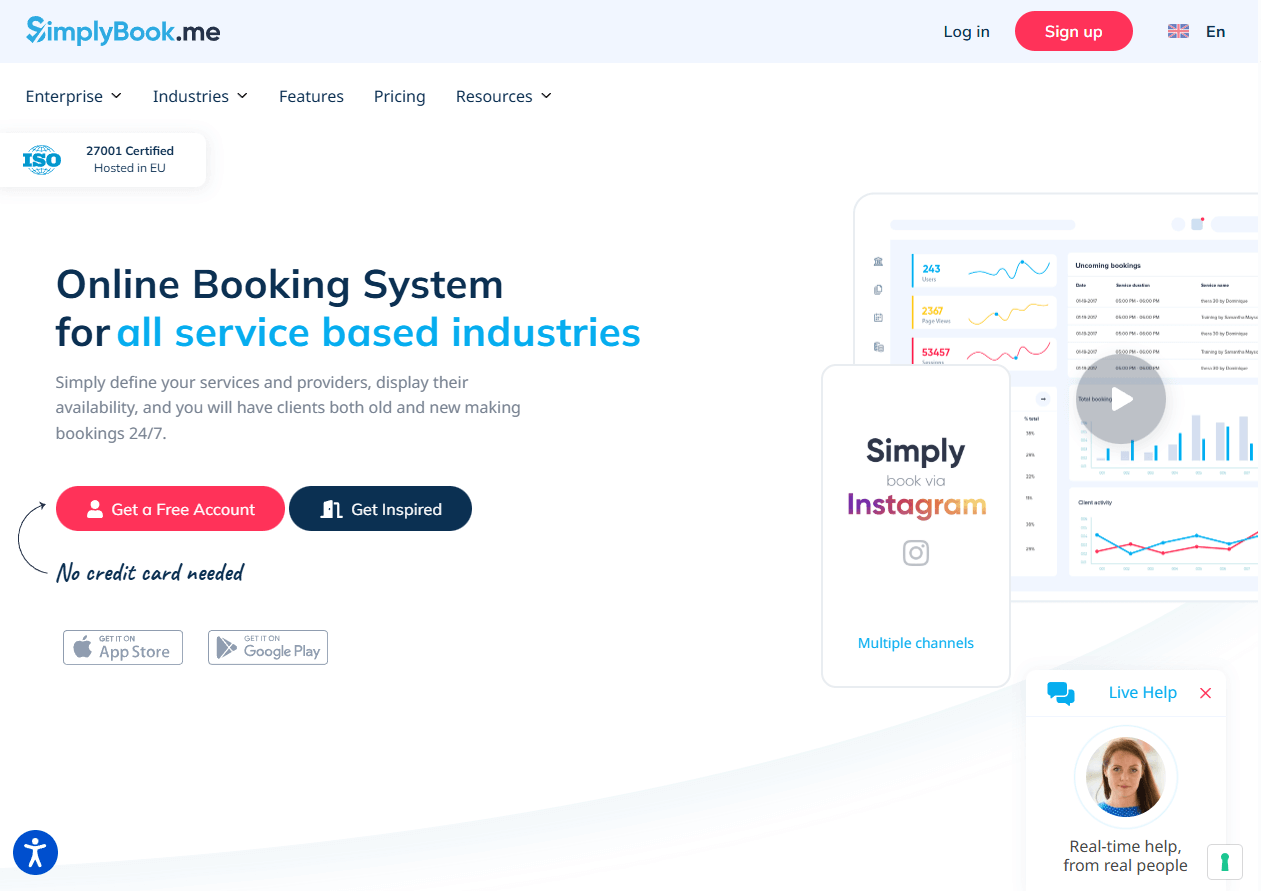
SimplyBook.me provides one of the most monolithic and scalable appointment scheduling options to any enterprise in need of client booking, employee scheduling, or meeting coordination. The issue of efficient scheduling is not given a lot of attention as an operational problem; however, it directly affects customer satisfaction, employee efficiency, and profitability.
SimplyBook.me is a free and easy to use service that allows businesses to create individualized booking pages, automatically remind customers of appointments and appointments to reduce cases of no-shows as well as client records in a centralized dashboard. The platform will facilitate the particular scheduling requirements of service-based organizations, including medical centers and gyms or consulting agencies and schools.
The level of customization is also one of the most valuable aspects of SimplyBook.me. Companies are able to build booking policies, establish availability based on staff or place, build a system of memberships, and incorporate intake forms within the booking process as an extension of their own services instead of configuring operations to a fixed system.
Connection to Zoom and Google Calendar would make the automatic addition of scheduled appointments to the staff calendar and creation of conferencing links. It is also an accommodating platform, which means that one can process payments during the booking phase, which helps minimize the administration overhead and enhances the cash flow.
Pricing: SimplyBook.me has a free plan that will cover the basic scheduling requirement. Paid plans start at $9.90 per month and increase with variations in the number of bookings and additional staff accounts as well as advanced custom features. There is also a larger organization that has a more complex requirement plan, called an enterprise plan.
Advantages: Easy to use interface with booking pages that are highly customizable. Zoom, Google Calendar, and payment processor integration are possible. Enterprise-scale can support individuals operated on a small scale to high-scale organizations.
Disadvantages: Some features including custom reporting and priority support only appear on more expensive plans. The first-time configuration of businesses where the scheduling is highly complicated might require time before setting up properly.
Microsoft Teams – Communication and Collaboration
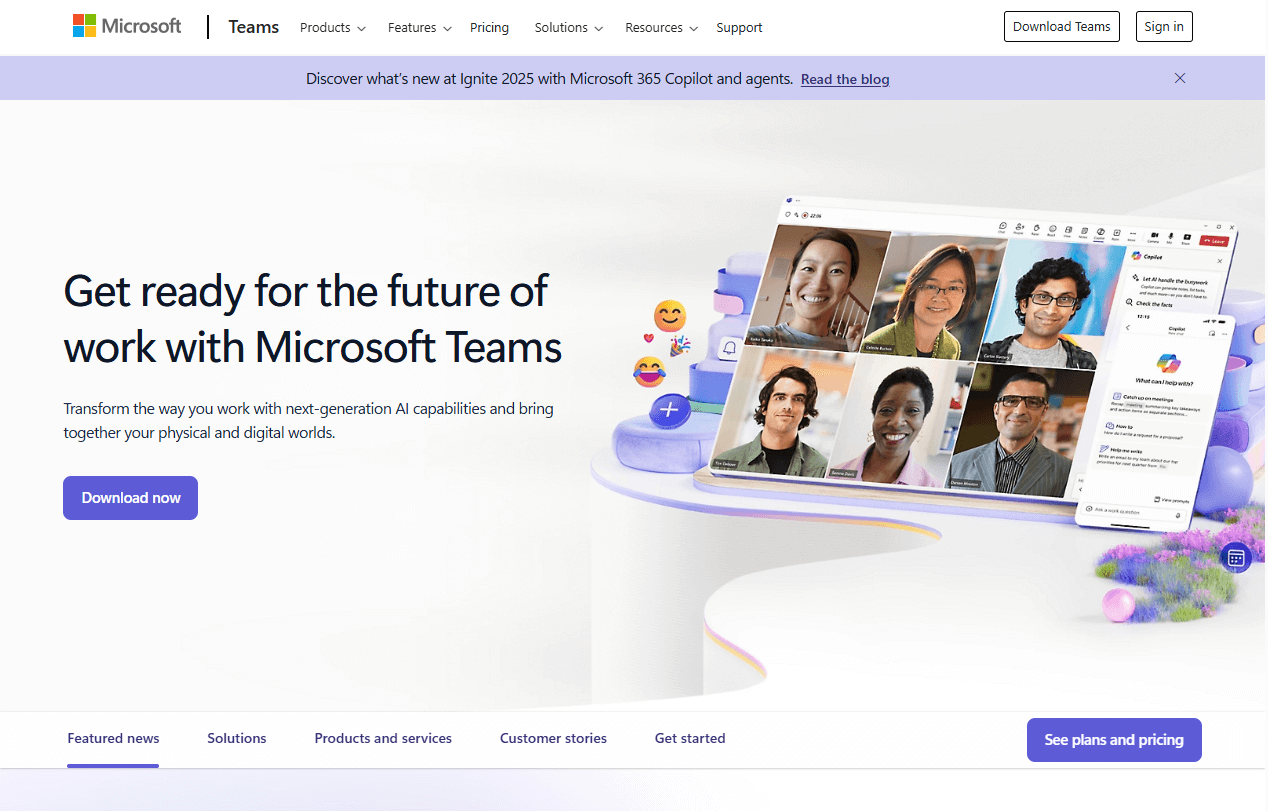
Microsoft Teams has proven to be one of the most competent platforms of one-stop communication and collaboration in the corporate market. It integrates video conferencing, instant messaging, file sharing, collaborative document editing and project coordination into one workspace minimizing the disintegration that occurs with an organization using a plethora of unconnected tools.
The greatest asset of the platform is that it is a part of the larger Microsoft 365 ecosystem. Documents in Word, Excel, PowerPoint, and SharePoint can be shared on teams chat and worked on together without having to switch the application as part of the same conversation, making it a very smooth and productive experience to organizations that are already committed to the Microsoft productivity suite.
Teams works well in large scale requirements too. The platform facilitates video conferences with up to ten thousand users and live events with even larger audiences that include and are not limited to internal coordination, company-wide town halls, and other webinars with clients. Security services such as end to end encryption and multi factor verification are suitable to the needs of controlled industries.
Price: Microsoft Teams presents a free version, which includes simple messaging and video conferencing. Prices begin with paid plans that are of the Microsoft 365 Business Basic tier starting at $ 4.00 per user/month with higher tiers including more storage, compliance features, as well as telephone integrations.
Associations: No impediments with Microsoft 365 applications. Sponsors huge conferences and live video streaming. Competent enterprise-level security and compliance capabilities.
Cons: Organizations that are already using Microsoft 365 can get the most out of the Teams. The initial configuring and installing of teams that are not used to working with Microsoft is sometimes difficult.
Slack – Team Communication
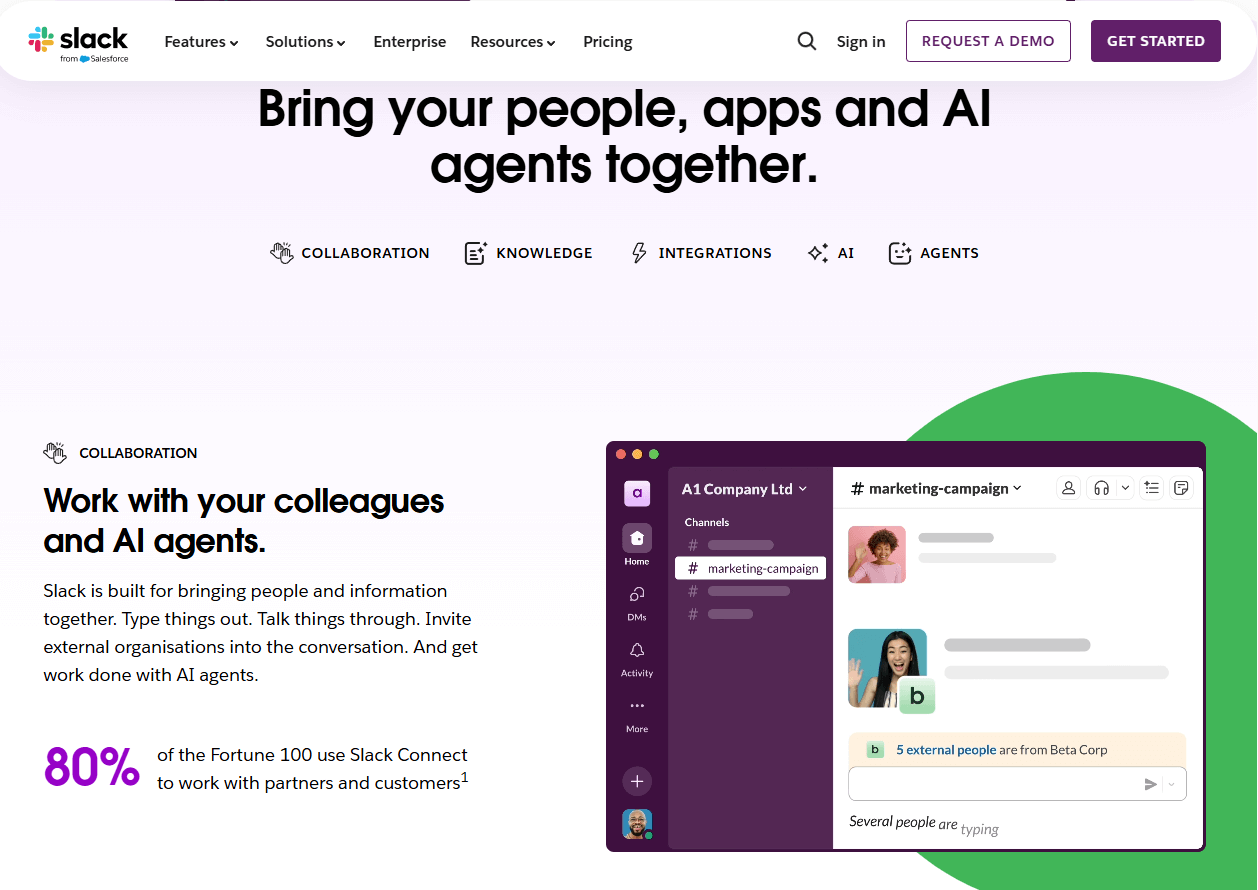
In contrast to Microsoft Teams, which relies on the intensive association with the ecosystem of a single vendor, Slack is more open, and it serves as a central node where all tools and workflows of a business are interconnected. Its message format based on the channels allows separate conversations in terms of project, a team, or a topic, making it straightforward to maintain a focused discussion and make it searchable.
The most useful practical feature of Slack is the means of decreasing the amount of emails and the muddiness of long threads. Using the discussion in an organized medium, the teams can keep track of the context and leave the communication where it is accessible to the whole team. The search functionality is so efficient that talks of the past, made decisions and shared files can be accessed in a few seconds on the platform.
One of the major strengths of Slack is the integration library. The platform is integrated with more than two thousand third-party applications, so the notifications and data of both sides of the tech stack can appear in Slack. Shared workflow automation capabilities enable businesses to create their own processes without necessarily writing code to cut the heavy load of assignments.
Pricing: Slack is free and includes the basic messaging without limit to message history and integrations. Paid plans will begin with an option of 6.67 USD per user per month based on annual billing and Pro and Business+ are higher with longer history, unlimited integrations and increased administrative controls.
Advantages: User friendly interface and robust and quick search features. Eliminates a lot of spam in emails because team talks get all centralized. A vast number of integration choices including thousands of third-party applications.
Cons: Free edition only shows the latest ninety days of the history of messages and restricts the integration connections. The number of channels and notifications can overwhelm in large organizations without any clear governance policies.
Trello – Visual Project Management
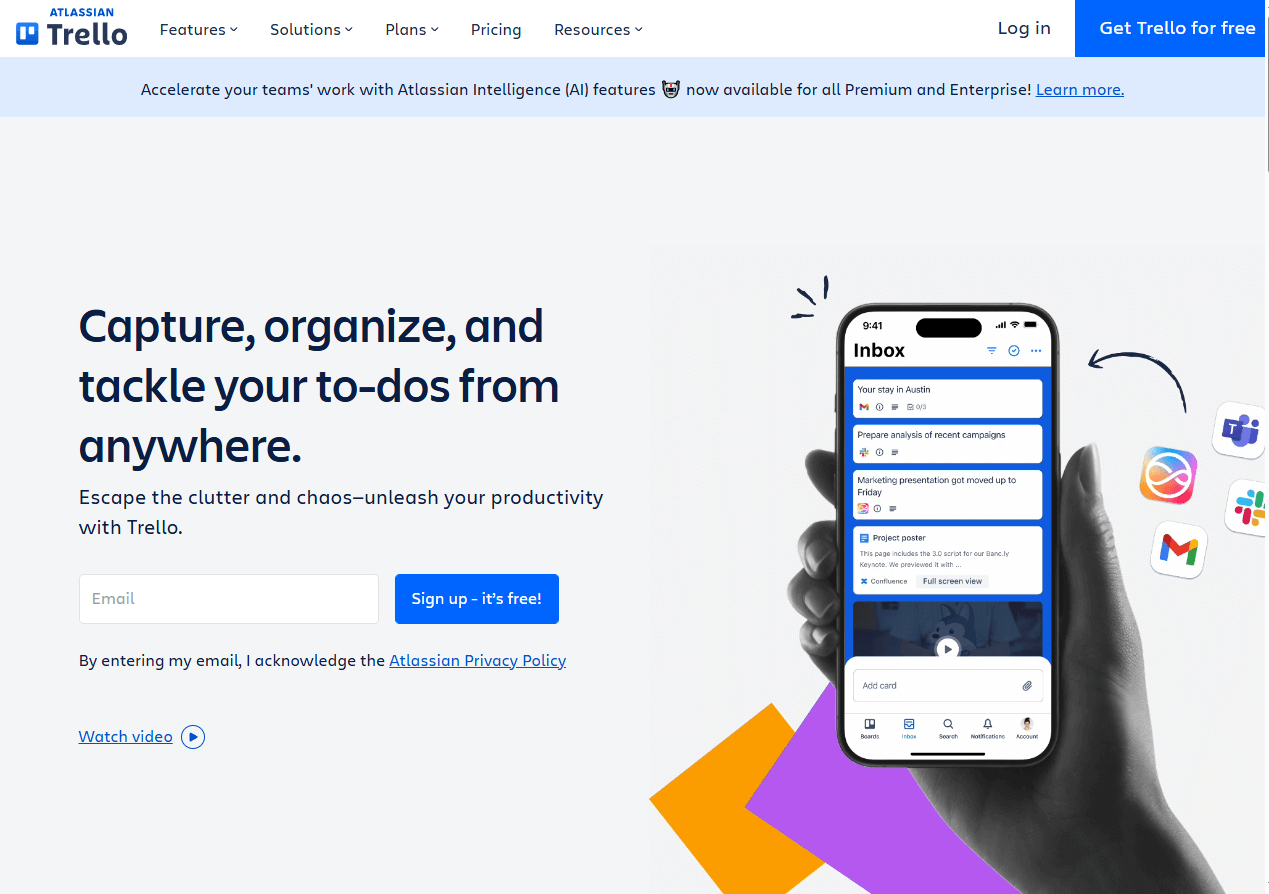
Trello offers greater visual enticement to project management that is appealing to groups of people in that they enjoy seeing their algorithmic faces in a space as opposed to having it entrenched in the list or spreadsheet. Trello is a board-driven space of work which is based on the Kanban board and enables teams to manage the workflow by placing tasks in cards and passing the cards through a process with activity segments that can be adjusted and tracked within a single screen.
The drag and drop feature of the platform is very accommodating. Once the product is started it is possible to get into constructive work within minutes, and this reduces the hurdle to adoption. Boards may belong to nearly any process, including product development sprints, marketing campaign planning, content calendars or event organization.
Power-Ups feature of Trello makes it much more functional: it adds integration, automation rules, custom fields and more views such as timeline, calendar and table formats. Combinations with such tools as Slack and Google drive guarantee that Trello looks like a part of the current processes.
Pricing: The Trello has a free cap which allows an individual and ten boards per workspace has unlimited cards and is adequate to use by individuals and small teams. Paid plans begin with $ things at 5.00 a month in case of a year-to-year payment and include unrestricted boards, extensive automation, and extra Power-Ups.
Advantages: The interface is very graphic and user-friendly and can be easily adopted. Adaptable to accommodate an enormously diverse range of projects and processes. Close collaboration with Slack, Google drive, and dozens of other applications.
Cons: When the projects are large-scale enterprise projects with their complex dependencies and resource management needs, Trello may not prove sufficient in comparison to stronger project management tools. The capabilities of advanced reporting and workflow automation are paid plans.
Salesforce – Customer Relationship Management (CRM)
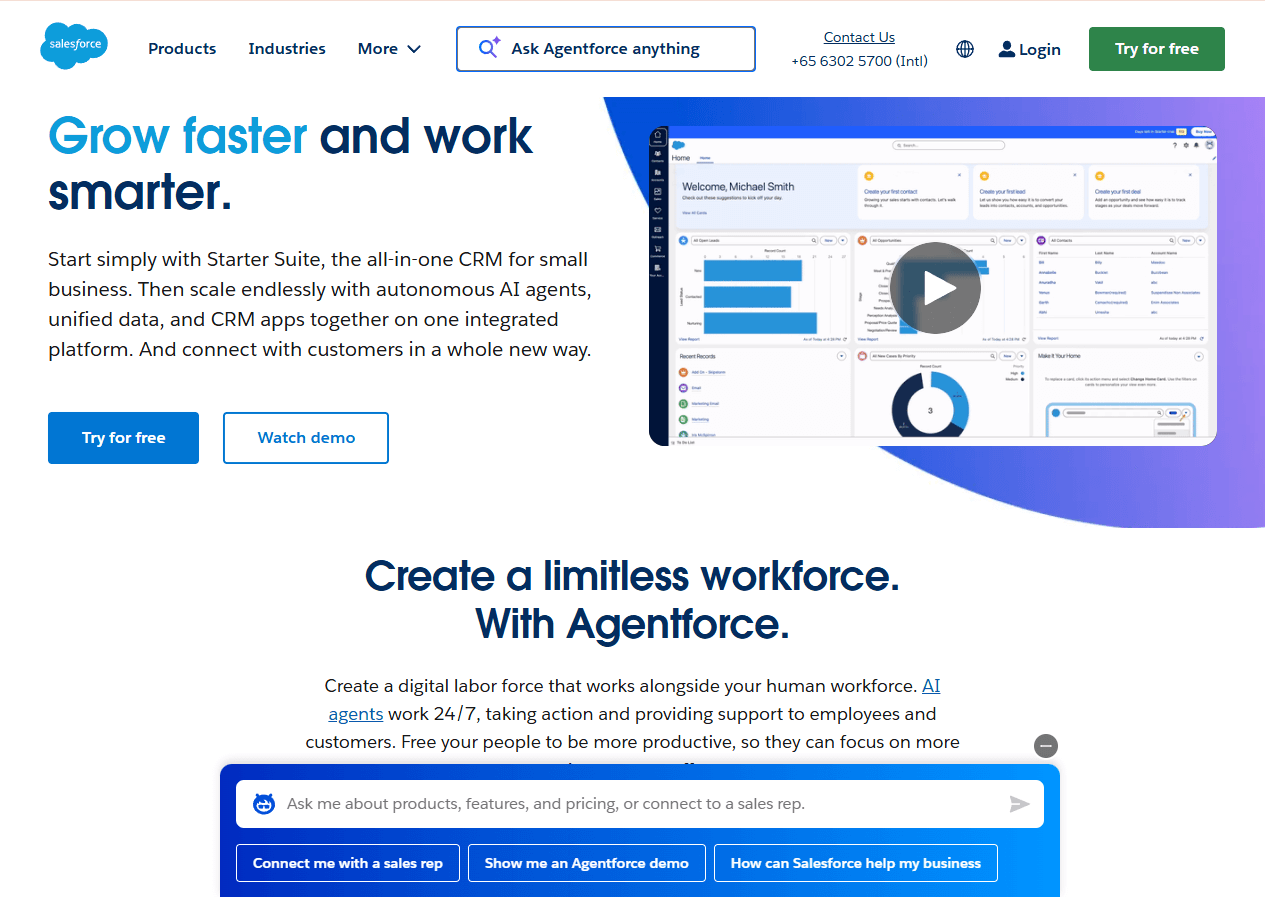
Salesforce has won the CRM market of enterprises due to more than 20 years of reasoned success. Its unrivaled richness, elasticity and scalability is apt to smaller companies that are in the middle range of growth and even the largest companies in the world. Fundamentally, Salesforce offers a database-like platform where sales managers can manage their customer information, opportunity and coordinate communication information throughout the customer cycle.
The power of the analytics is especially strong on the platform. Sales Leaders have the flexibility of tailored dashboards that provide them real-time data on the balance of the pipeline, prediction and sales trends, which promises to do better planning and respond more swiftly to customer trends.
In addition to the central CRM use case, Salesforce has expanded to also be seen as an entire ecosystem of marketing automation, customer care and industry-allocated solutions. The AppExchange marketplace has thousands of pre-built integrations to enable businesses to tailor their implementation to meet exact business operational needs.
Pricing: Salesforce has a few lines of the products in place, and the price of Sales Cloud starts at 25 per user per month in the Starter plan. More sophisticated models which also have automation, an artificial intelligence feature, enterprise-level customization are more expensive.
Advantages: very scalable and applicable to any business enterprise. Extremely customizable reporting and dashboards. Vast network of integration and third-party apps via AppExchange.
Disadvantages: The platform has a heavy price tag when dealing with enterprise levels, and its scale can put new users and administrators through a steep learning curve. Each of these approaches may demand special Salesforce knowledge, whether internally housed or via a consulting firm.
HubSpot – Marketing, Sales, and CRM
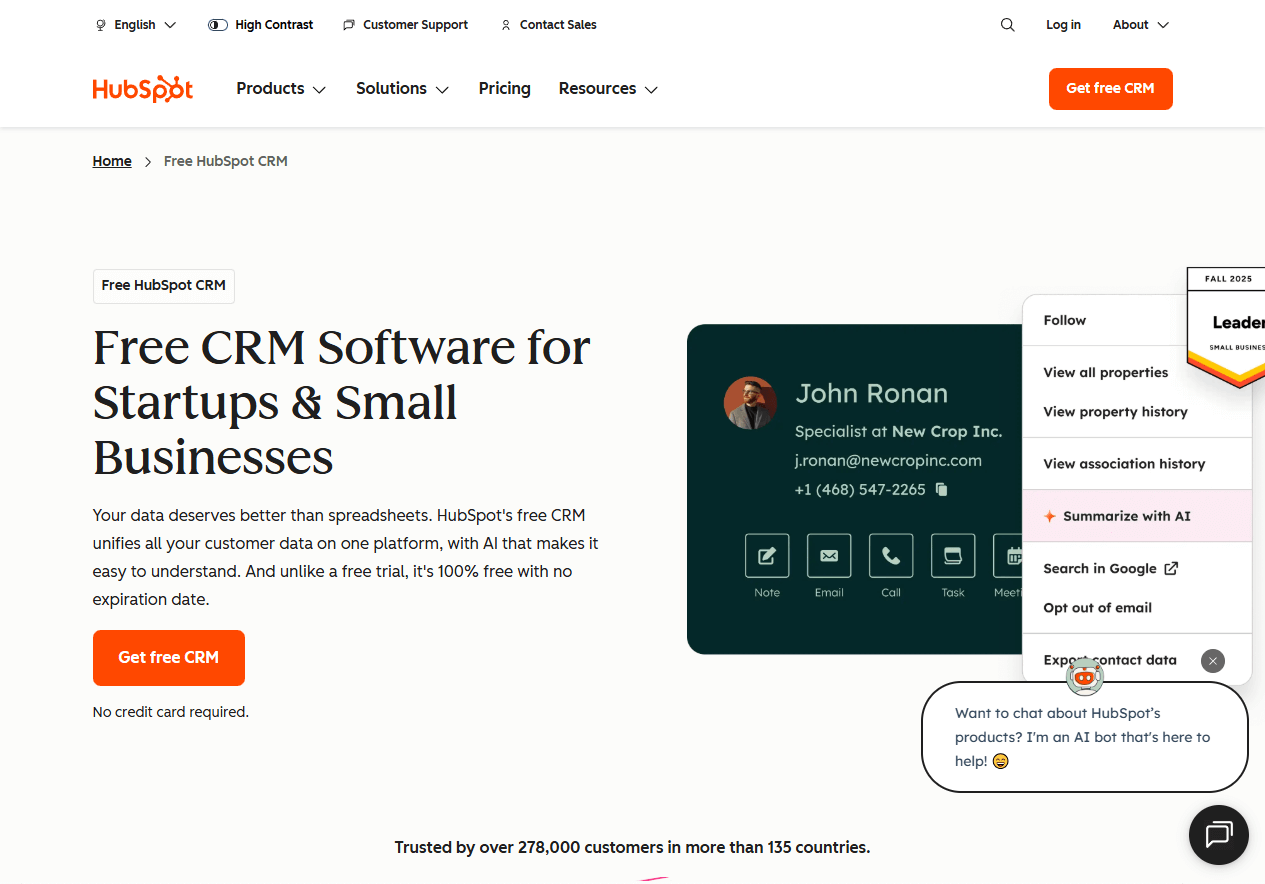
HubSpot goes another equally interesting route. Where Salesforce is reputed to be highly customized and placed on large business-level might, HubSpot is touted to be approachable and its customer responsiveness to employees who might be new to the integrated marketing and sales environment.
The platform unites marketing automation, sales pipeline control, customer service, and CRM into one united package. The data of marketing activity automatically informs the sales staff, and interactions on the service side are reflected in the contact record, providing each team member with an overall picture of each customer relationship and allows providing a uniform and personalized experience.
The content generation systems including the blog manager, landing page constructors, and email editors at HubSpot target marketers wishing to create content without the involvement of the developer. Together with lead nurturing and visual attribution reporting, the platform offers all that a marketing team requires to plan, execute, and optimize campaigns over one platform.
Pricing: HubSpot has a company CRM that is free and has an extensive amount of functionality that a lot of small and medium-sized businesses deem enough to start with. Marketing Hub is available as paid plans that begin with $50 monthly and go up depending on the requirements of the number of marketing contacts and features.
Advantages: End-to-end platform for integrating marketing, sales and customer service data. A free level serves as a valuable proposition to smaller groups and nascent companies. The process of onboarding is simple due to excellent educational materials and community.
Disadvantages: HubSpot price may rise dramatically when expanding the contact lists and adding more advanced options. The initial setup of complicated workflows in marketing automation can need time and solutions.
Zoom – Virtual Meetings and Webinars
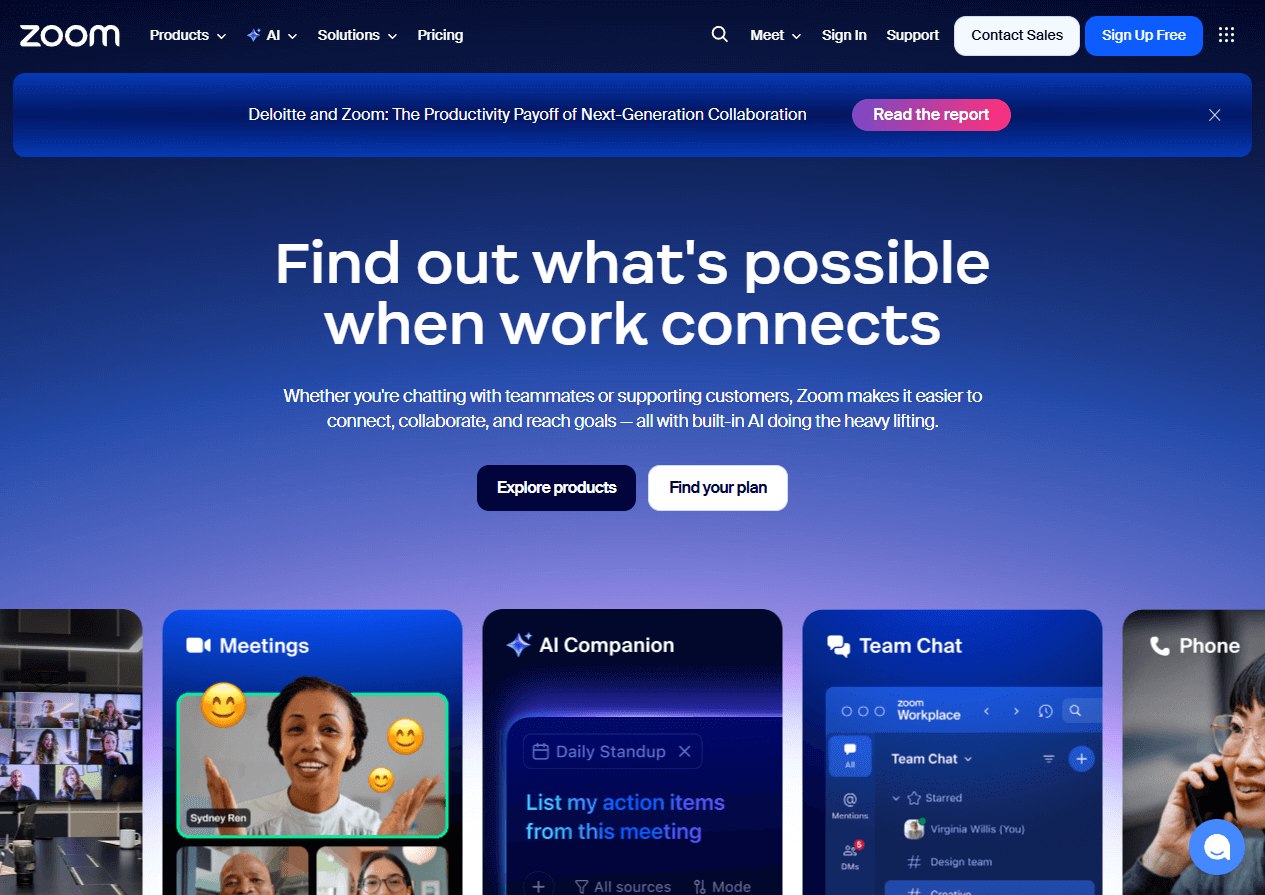
Zoom has been so ingrained in the business communication that it has become virtually a verb. In addition to its ubiquity, it still manages to stand its ground in the tech stack of enterprises by consistently offering quality video and audio that its users can rely upon, and at a level of simplicity that cannot be matched by its competitors.
The site serves the wide range of needs. Small group meetings, big company meetings, sales presentations to the customers and training programs can all operate effectively on the Zoom infrastructure. Functionalities such as screen sharing, breakout rooms, and polling, as well as real-time transcription, make the sessions much better and engaging.
To the enterprises of the external-facing events, Zoom Webinars offers the Q and A features, the registration department, analytics of the attendee, and connection to the marketing automation programs. This proves to be useful with Zoom not only in internal communication but also in demand generation, educating the customers, and enabling partners.
Pricing: Zoom also has a free option of basic meetings that last up to forty minutes (group) meeting. The cost of the plans will begin at 14.99 per host/premonstration monthly, with the more increasingly priced plans having prolonged meeting times, increased participant perks, and cloud recording storage services, along with escalated webinar features.
Advantages: support very good quality video and audio throughout a variety of network environments. Multimedia functionality such as breakout rooms, polls and transcription. Connects to Slack, Microsoft Teams, Google Calendar and many CRM systems.
Cons large-capacity meetings and advanced features of webinars need a higher tier of plans. The previous security weak areas, although mitigated, demand that the organizations should continuously upgrade their security settings.
Asana – Task and Workflow Management
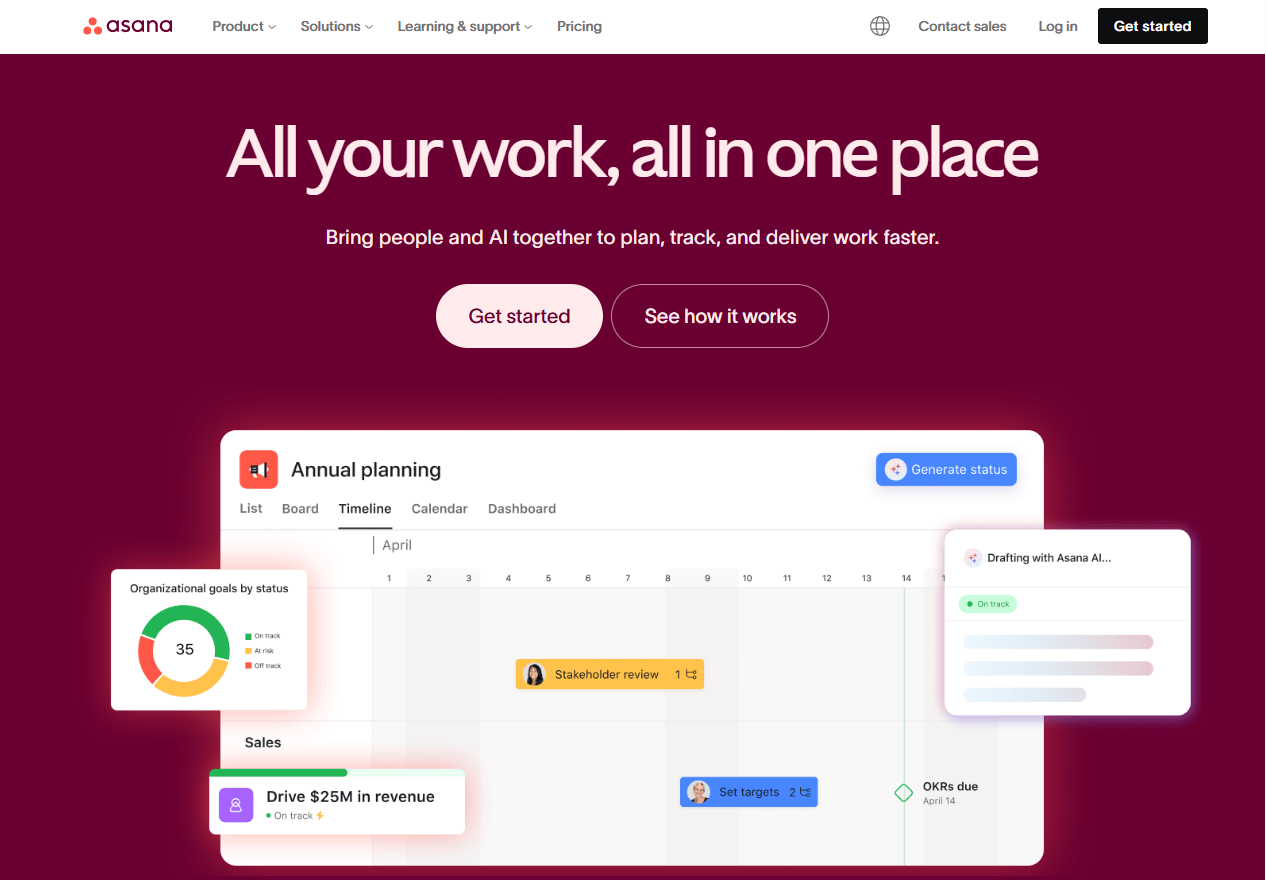
Asana lies at the cross-section between project management and workflow automation and it provides teams with a dynamic platform to arrange the work within the department and various scales. In comparison to the visual boards which are the main concern of Trello, Asana offers more views and structures which fits any to-do list, as well as cross-functional projects.
The platform will provide basic list, board, timeline, and calendar views, where various team members are able to see the same project information in the format they rely on best. A product manager can have a preference of using the timeline view to monitor dependencies whereas a content creator can have a preference of using the list view to accomplish day-to-day tasks. This has been made unlimited because it promotes wider usage.
The workflow automation options of Asana are one of the most available in the market. Rules can be written without the need to write code to enable teams to act when tasks change their status, when there is a due date, or when an assignment is altered. These automations remove the repetitive administrative tasks and minimize the possibility of tasks going through the cracks as they are transferred through individuals in the team.
Pricing: Asana also has a free plan which supports small team core task management. Paid cost begins with 10.99 dollars per user monthly with the annual payment plan and Business and Enterprise levels offering superior reporting, create to tailor rules, and portfolio management choices.
Advantage: Multitask management where various perspectives can be used to work effectively. Seeing workflow automation of processes that can be done manually. Integrations with Slack, Zoom, Google Drive and Salesforce.
Cons: The higher-quality plans will be required in case the reporting requirements become more complicated. Multifaceted and multilayered teams might require time and training to optimize the platform.
Tableau – Data Visualization and Analytics
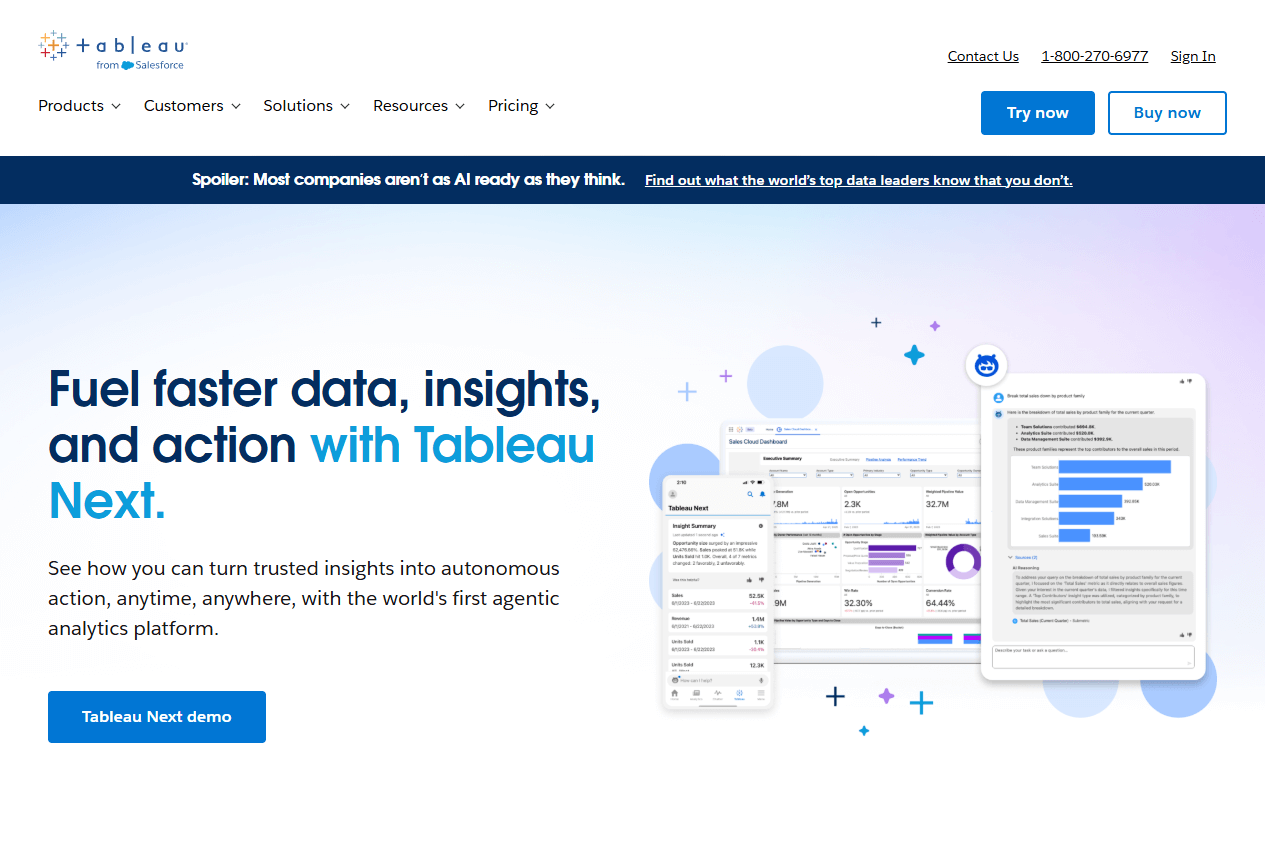
The skill to transform an unprocessed number into comprehensible, practical insight is perhaps one of the most important skills that can be acquired by an enterprise. Tableau offers some of the most effective data visualization solutions structured to provide analysts and business leaders with an ability to interact with databases and extract complex data, create a database which is interactive in nature, and makes more informed decisions.
The platform has large datasets that are efficiently handled considering spreadsheets, databases, cloud services, and enterprise platforms such as Salesforce. This connection enables businesses to pool data in several systems into one analysis thereby removing the siloed reporting that prevents the determination of significant relationships around various segments of the business.
The interactive dashboards provided by Tableau also enable the user to be able to drill down on the data, use filters and test theories without query writing or creating new reports. This interactivity allows business users to self-answer their queries as opposed to waiting in line to request the analytics team to provide answers.
Pricing: Tableau charges users based on the accounts of a Viewer level (starts with $15 per user per month) through which clients can access published dashboards. The Creator tier that includes the ability to create and publish dashboards comes at $70 per user per month.
Advantages: Highly customized and detailed visualization that is well adapted to the complex analysis requirements. Works with massive amount of data and supports a vast array of data sources. Interactive dashboards allow users in the business to browse data on their own.
Cons: Although the platform has a higher learning curve than most business intelligence tools, it is more complex to those users who hunger to create more intricate visualizations using the built-in tools. Enterprise pricing might be effective, especially when there are large groups of people who need access to Creator.
Bonus Tool: The LastPass to Passwords and Security Management.
The LastPass Security is an aspect in the operations of an enterprise that not so much draws serious attention as it should before something falls out of order. LastPass solves one of the few vulnerabilities of organizational security, which cannot be neglected: poorly managed or reused passwords.
The platform enables the teams to save passwords safely, share passwords in restricted circles ensuring protection of sensitive accounts with high quality unique passwords without straining employees. IT teams have the benefit of visibility of password health, user activity and access controls throughout the organization with centralized administrative controls.
Multi-device service means that employees have accessibility to credentials in any place as well as security, and this is quite crucial when referring to remote and hybrid teams. Single sign-on integrations are also enabled in the platform, which is easy to authenticate, but high security is ensured.
Pricing: LastPass has a free plan to individuals. Plans begin at $4-per-user-per-month on the Teams plan; and $6-per-user-per-month on the Enterprise plan, which is likewise comprised of more complicated administrative applications and compliant coverage.
Advantages: Gives users a convenient time in managing their passwords and throughout the company, not leaving their credential practices sacrificed. Enterprise security is controlled in a centralized administrative way. Multi-device access will provide usability to remote and distributed teams.
Cons: Higher tier plans are required to make use of more advanced security and compliance reporting. It needs to be adopted organizationally in order to provide all the protection it is capable of delivering, like any other password management tool.
Choosing the Right Tools for Your Enterprise
There are so many useful tools in the market that it should be followed by a proper definition of your needs and not by market popularity or features number. The strongest platform in the world does not help you at all when it is not in line with the mode of operation of your team.
Begin by drawing the workflows that you have now and establishing bottlenecks that are consuming most of the time and money. Instead of making an immediate switch to a new technology stack, it is better to focus on addressing those particular issues. Well planned, graduated adoption results in more permanent outcomes than a total change that flusters your team.
Check if it will be congruent with your currently existing tools first. The additions that are added to a tech stack should be those that flow well with the already existing systems, and not the ones that form new silos. The majority of the tools listed here have a free trial and the best approach to determine fit is to conduct a well-organized pilot on actual workflows with actual team members.
Take into account the overall cost of ownership other than that of subscription. Training requirements, onboarding time, and administrative overhead as well as the possible migration expenses all add to the actual investment. The truly easy to adopt tools are more valuable in the long-term despite a variant of a upfront price premium.
Lastly, consider the direction your business is going. A tool that can accommodate your immediate specifications but is unable to scale will have to be substituted sooner than anticipated. When selecting the platforms that are geared towards enterprise growth, though you may not require all it has just yet, it will create a more stable and sustainable foundation.
Conclusion
The appropriate tools do not only facilitate the functioning of enterprises. They are the ones who contribute to making something possible. By 2026, the companies that provide their teams with the appropriate mix of the scheduling, communication, project management, CRM and analytics systems will work faster, serve their customers in a better way and compete in the market more successfully than the ones, which use outdated systems.
The ten tools that were looked into in the present guide correspond to different aspects of the operations of an enterprise. They can be used mindfully and together to form a technology ecosystem that does not hinder your team but assists it in performing best work.
This type of direct investment into your ability to grow, create value, and be competitive in a competitive digital environment is one of the most unambiguous investments you can make. It is the business that makes sound decisions concerning technology that will be doing well in several years to come.