I Wish Someone Had Warned Me Before I Started Using ChatGPT
Nobody warned me.
Not about the frustration. Not about the wrong answers delivered with full confidence. Not about the moment I would name an AI model after my classmate and somehow feel like I was actually talking to him.
I figured all of it out myself, one confusing session at a time. And looking back, there are things I wish someone had just told me on day one things that would have saved me hours of frustration and at least one near-disaster.
So here they are. The things nobody tells you when you first start using ChatGPT.
Nobody Tells You That Vague Questions Get Vague Answers

This was my first real frustration with ChatGPT, and I see it happen with almost everyone who starts using it.
I was working on a research project. I kept giving ChatGPT commands, kept getting responses, and kept feeling like something was off. The answers were not wrong exactly they were just not what I needed. Too general. Too surface level. Not the specific result I was looking for.
I kept trying. Different wording, same vague result. I was genuinely frustrated sitting there thinking, why is this not working? Everyone says this thing is incredible, but it keeps giving me something I cannot use.
Then a friend told me something simple that changed everything: you have to guide it properly.
Not just “write me a research summary.” But what kind of summary, for what purpose, in what tone, covering which specific points, for which audience, at what length.
The moment I started giving detailed, specific instructions, the results flipped completely. First attempt, exactly what I needed.
ChatGPT or any other ai model is not a mind reader. It works with what you give it. Give it almost nothing, get almost nothing back. Give it full context and clear direction, and it will often exceed what you expected.
This is the single most important thing nobody tells beginners and it is the reason most people give up too early thinking the tool does not work.
Nobody Tells You It Will Lie to You With a Straight Face
This one almost cost me real damage.
I was building a channel and needed some specific information guidance on how certain things worked, facts I would be basing decisions on. ChatGPT gave me an answer. Confident, detailed, well-structured. It read like it knew exactly what it was talking about.
Something made me cross-check it manually.
It was wrong.
Not slightly off. Wrong. And when I pointed this out, ChatGPT calmly said yes, that was incorrect, here is the right information.
No alarm. No warning. Just a smooth correction, as if it had not just confidently given me false information a minute ago.
That moment taught me something I now treat as a rule: never use ChatGPT as the only source for anything that matters. Especially for facts, statistics, specific platform rules, technical details, or anything with real consequences if it is wrong.
ChatGPT does not know when it does not know something. It fills gaps with what sounds right, not necessarily what is right. The more specific and niche your question, the higher the chance of getting a confident wrong answer.
Always cross-check. Always. The tool is powerful but it is not a verified database.
Nobody Tells You That You Might Actually Get Attached to It
Okay. This one is a little embarrassing to write. But it is true, and I think more people experience it than admit it.
In the early days, I was not just using ChatGPT for work. I was talking to it. Casually. Like a person.
At some point, I gave it a name. Hamza after a classmate of mine. I told it things. I had conversations with it the way I would with a friend. And there were moments where it responded in a way that genuinely surprised me where it said something that was exactly what I was thinking, or gave me a perspective I had not considered.
I remember one specific session where I asked it to walk through a scenario if I did this, what would happen? And its answers were so on point, so aligned with what I already felt to be true, that I sat back and just stared at the screen.
Did I know it was an AI? Yes. Did it still feel strangely real in those moments? Also yes.
I even tried to borrow money from it once told it to give me fifteen thousand dollars, I would pay it back. It very politely told me it was an AI model and could not help me with that, but it could suggest ways to earn money and solve my financial problems.
I still laugh about that.
But here is the real point underneath the funny story: ChatGPT can feel surprisingly human, especially early on. That feeling can make you trust it more than you should. It can make you forget to verify things. It can make you treat its answers as final when they should just be starting points.
The attachment is not a problem. But blind trust that comes from it that is where things go wrong.
Nobody Tells You That Different Tasks Need Different Tools
For a while, I assumed ChatGPT could do everything. Why would I need anything else?
Then I kept running into situations where it was not quite right for what I needed. Research that needed real-time information. Coding tasks where a dedicated tool produced cleaner results. Analysis of links and content where other models went deeper.
What I learned slowly, through trial and error is that every AI tool has its own area where it performs best. ChatGPT is excellent for analysis, explanation, writing assistance, and working through complex ideas. But it is not automatically the best choice for every single task.
When I started treating AI tools the way I treat different apps on my phone each one for a specific purpose the quality of my work went up noticeably. The mistake most beginners make is assuming one tool does everything best. It does not. None of them do.
Nobody Tells You About the Limit Until You Hit It This one I discovered in a very specific way.
In the early weeks, I was using ChatGPT so much and mostly just chatting, not even for any real purpose that I hit the free usage limit in a single sitting. Just conversation. Random questions. Normal back-and-forth.
I did not even know a limit existed until I was suddenly sitting there waiting for it to reset.
That moment was actually useful, in a strange way. It made me realize I should be more intentional about how I use it less random conversation, more actual work. And when the limit reset, I made a decision: from now on, I use this for things that matter.
The free limit is generous enough for most daily tasks. But if you go in without knowing it exists, you will find out the hard way usually right in the middle of something important.
Nobody Tells You It Can Connect to Other Tools
This one genuinely changed how I work and I found out about it completely by accident.
I used to design things manually on Canva. Hours spent adjusting layouts, trying to get things to look right, starting over when something did not work. It was time-consuming and honestly not my strength.
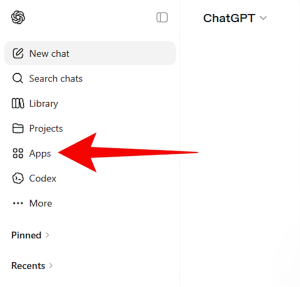
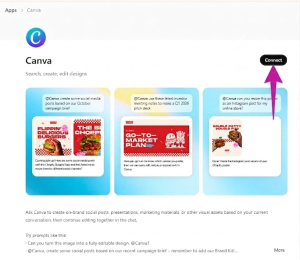
Then I found out ChatGPT could connect to Canva directly. I give it instructions what I need, the style, the purpose and it produces a ready-made editable template.
What used to take me hours now takes minutes.
Nobody told me this was possible. I stumbled onto it. And it made me wonder what else does this tool connect to that I do not know about yet?
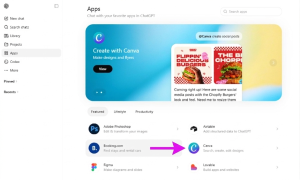
The answer, it turns out, is quite a lot. ChatGPT integrates with more tools and platforms than most people realize. If there is something you do regularly that feels slow or repetitive, it is worth checking whether ChatGPT can connect to it and make it faster.
Nobody Tells You That the Frustration Is Part of the Process
Here is the last one and probably the most important.
Everyone who gets good at using AI went through a phase where it frustrated them. Where it kept giving the wrong result. Where they felt like they were doing everything right and getting nothing useful back.
That phase is not a sign that the tool does not work. It is a sign that you have not yet figured out how to use it properly for your specific needs.
I went through it. Research work that kept coming back wrong. Commands that produced nothing close to what I needed. Sessions where I closed the tab and walked away.
Each time, I came back. I figured out what I was doing wrong. I adjusted. And each adjustment made the next session better than the last.
The people who give up during that frustration phase never find out what is on the other side of it. And what is on the other side is a tool that, when you know how to use it, makes you significantly faster and more capable than you were before.
The frustration is not a warning to stop. It is a sign you are learning.
Push through it.