Someone I Trusted Scammed Me in Business: Here’s What I Learned the Hard Way
Every new freelancer and software developer starts their online journey with one major mistake: Trusting a person’s face instead of a professional system. When we start out, we spend all our time trying to improve our skills. We learn new coding frameworks, try to make websites load faster, and write cleaner code. But nobody teaches us how to spot a bad client or how to protect our hard earned money when working with someone from our own social circle.

This isn’t a boring lecture on business ethics. This is the exact, true story of how I got scammed on a web development project when I first started out way before I launched my official software development agency, Cubecod Technologies.
By sharing this painful experience, I want to show you the exact tricks bad clients use, the mental stress it causes, how I indirectly recovered 70% of my stuck money, and the strict rules I now use to keep my business 100% safe.
The Social Reference Trap: Relying on a Friend’s Name
Back in late 2023, I was highly emotional when it came to business decisions. I was managing a very tough engineering degree at that time. If you have ever chased an engineering degree, you know how brutal it gets. Your schedule is packed to the limit, your brain is always tired from complex assignments, and your family has one strict rule: Focus completely on your studies, a normal job is not allowed.
But as a student, daily small expenses add up quickly. Buying thick registers for coaching classes, paying for non-stop assignment photocopies, and managing daily pocket money becomes a quiet financial burden. I didn’t want to ask my parents for extra cash every week. I wanted to bear my own expenses.
That’s when a stranger reached out to me directly on WhatsApp with a project offer. My guard was completely down because he was a close friend of my best friend.
The Mistake in My Thinking:
[My Best Friend] ---> [His Stranger Friend] ---> [I assumed he must be a good person] ---> [No Advance Taken]
He called my number, spoke very warmly, and shared a big plan. He needed two proper websites: one for his office company and another for a personal brand. He said, “Bro, it’s a very basic and simple website, nothing complicated. Just clean pages.”
Because my best friend knew him, I made the biggest mistake of my career: I agreed to build two complete, live websites based on just simple chat messages and phone calls, without taking any advance payment.
The “No Tension” Trap: Decoding the Scammer’s Words
While working on the first website, the client used a very smart psychological trick. Whenever I tried to talk about project details or updates, he would instantly shift the topic to money and give me huge, fake promises even when I hadn’t asked for an invoice.
The Client’s Repeated Words: “Bro, just completely forget about the money. Don’t take any tension about payments at all. If I like your work, I will pay you a huge extra bonus. I have a long list of 10 more websites waiting next month, I will hand them over to you immediately.”
As a young developer, this felt amazing. I thought I had found the perfect client. In reality, it was a trap. When a client repeatedly keeps telling you “don’t worry about money” on his own, he is creating a fake layer of trust. He does this so you don’t demand hard payments, allowing him to extract free, late-night labor out of you.
The Staging Mistake: How I Lost My Control
The worst technical mistake I made was letting the client choose the hosting setup. Normally, a professional agency keeps the website on their own private test server until the full payment clears. But this client requested that I build everything directly on his live personal domain.
My Big Infrastructure Mistake (2023):
[My Hard Work & Code] ===> Directly Uploaded to ===> [Client's Personal Hosting/Domain]
Result: The client got full control of the website before paying the final bill.
His excuse sounded clean: “I want to watch the progress live every day so we can change things faster.”
Because of my friend’s reference, I agreed. I built both websites directly on his live hosting. By doing this, I handed over the final product before he paid the final bill. He could see the files, check the layout, and control the server passwords while my payment was still completely unsecured.
The Trap Springs: The Milestone Trick and My Late-Fees Crisis
To make sure I didn’t doubt him, the client played a very clever game. When the first website was 100% complete, I asked for some money. Without any delay or excuse, he instantly transferred 40% of the payment.
This minor success completely fooled me. My brain thought, “Wow, this guy is genuine and pays instantly.” With all my doubts gone, I started working non stop on the second website. He wanted it done as fast as possible. I stayed awake until dawn matching his international client time zones, changing layouts, and fixing backend scripts.
The moment the second website was 100% complete and both sites were live on his server, I sent the final bill for the remaining 60% balance (which was around Rs. 75,000 to Rs. 85,000).
Instantly, his friendly behavior vanished. The warm phone calls turned into a cold wall of excuses: “A minor money issue just came up in my accounts, give me a few days and I will clear your payment.”
The Reality Check: What He Said vs. What Actually Happened
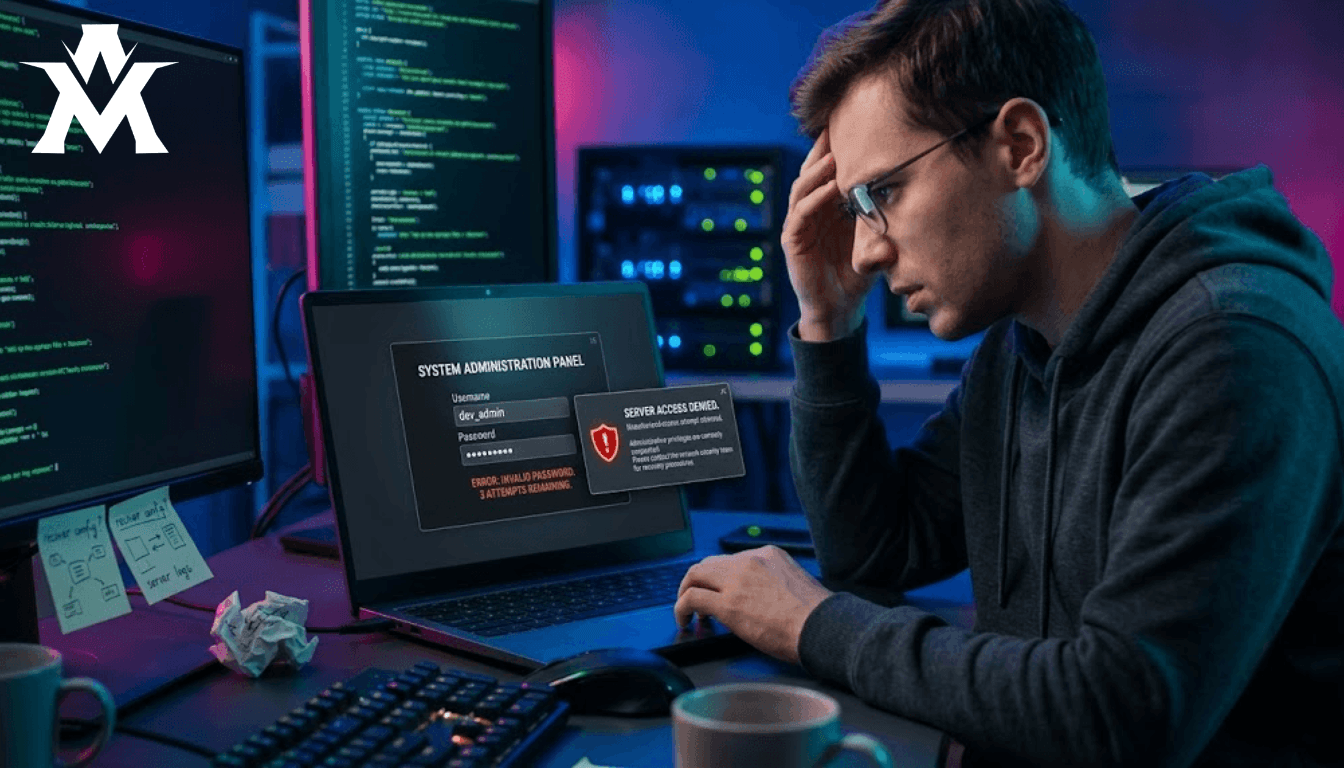
| The Scammer’s Fake Promises | My Urgent Human Need | The Final Ugly Result |
| “Your money is completely safe with me, relax.” | My colleges fee deadline was expiring that same week. | Total silence. He ignored my calls and left messages unread. |
| “I am a solid businessman, I will even pay your late-fee fine.” | I faced heavy embarrassment at college due to his payment delay. | He completely blamed me and refused to take any responsibility. |
| “I have massive international projects waiting for you.” | My student budget completely broke down because my money was stuck. | The client permanently blocked my number on every network. |
The situation became deeply stressful. I didn’t need that money for shopping or luxury I urgently needed it to pay my college fees. I explicitly told him this, explaining that my deadline was ending and the colleges would charge me a heavy late fee penalty.
With extreme confidence, he told me: “Don’t worry about the penalty fine, I will pay your late fees out of my own pocket. Just don’t take tension, your money is with me.”
I believed his confident tone and waited. The deadline passed, the late fee penalty was applied to my college account, and the moment I tried to call him, he completely disappeared. He stopped picking up my calls. His phone would be switched off for days.
When I went to my best friend to make him talk to the client, the shock doubled. The client lied straight to my friend, saying: “I have already paid him full money during the first phase. I don’t owe him a single rupee.” My friend, instead of standing by the truth, backed out and told me: “He says he has paid you. I have nothing to do with this matter anymore, please don’t involve me again.”
Shortly after, the client permanently blocked my number everywhere, leaving me with an academic fine, a broken friendship, and a loss of Rs. 85,000.
The Counter-Operation: How I Recovered 70% of My Money
Sitting alone in my room with immense anger, I realized that crying or begging a scammer would never bring my money back. I knew I had built a highly complex, premium system. Even though he had changed the passwords and locked me out of the admin panel, no smart developer leaves an infrastructure completely unmonitored.
I stopped trying to call his blocked number. Instead, I initiated a quiet, technical check. I traced the backend connections of the website’s code and discovered a small loophole that the client had failed to clean up.
Without breaking any laws or deleting his main database, I isolated a critical connection of his website. I sent a highly professional, technical message through an alternative business channel that he hadn’t blocked. I made it clear with technical facts that his live international platform would face a complete system shutdown if the code wasn’t properly optimized by the original developer.
Realizing that his entire international business and reputation would crash if that website stopped working, his confidence broke. He was forced to route a secure payment trail through a secondary channel to settle the issue. Through this smart, calculated strategy, I successfully forced him to return 70% of my missing money. It came months late, and it didn’t fix the stress of my late college fees, but it taught me a permanent law of life: In business, you are protected by your own leverage, never by emotional trust.
Restructuring Cubecod Technologies: My Modern Payment Rules
That single scam completely changed my life and my approach to business. It made me realize that a verbal reference from a friend or relative holds zero value on a balance sheet. When you bring your personal emotions into business, you are inviting a financial disaster.
The day that recovered money cleared, I hardcoded a strict payment policy inside my agency, Cubecod Technologies. This system applies to every single human being whether the client is a premium corporate brand from Europe, a neighbor, a classmate, or a direct blood relative. No exceptions are ever made.
The Cubecod Milestone Engine
[Phase 1: Clear Retention] ----> Client MUST pay a strict 75% Upfront Deposit.
                                  * No exceptions for friends or family members.
                                  * If the client argues, the project is instantly cancelled.

[Phase 2: Granular Chunks] ----> Project is split into small, independent parts.
                                  * Each small part is billed and approved individually.
                                  * Code never leaves our test server until that chunk is paid.

[Phase 3: Final Delivery] ------> The remaining 25% balance must be 100% clear.
                                  * Full payment must clear the bank BEFORE code hand0ff.
If a new client shows any hesitation or makes excuses about paying our 75% upfront retainer during our initial chats, we straight up refuse to take their project. We do not compromise our business safety for anyone.
Additionally, every single project is locked behind a highly detailed, written scope agreement. This document lists every single feature, page, button, and exact deadline date. If a client tries to add extra work mid-project by saying, “Can you just do this one small basic task?”, we immediately pause the work, pull up the contract, and send them a separate invoice for the extra labor.
Honest Advice for the Next Generation of Freelancers

If you are a solo freelancer or a young developer starting your online journey today, I want you to print these rules out and keep them on your desk:
-
Stop Killing Your Own Worth: The biggest mistake new freelancers make is dropping their prices to absolute zero out of pure fear that the client will leave. When you sell your skills for cheap, you ruin the market value and attract the most toxic, fraudulent clients. Good clients respect premium rates because they know high-quality work requires real capital.
-
The Repeated Client Trap: If you take on a client for dirt-cheap rates just to “build your portfolio,” you are trapping your own future. When that same client returns after 6 months for an update, or when he sends his business associates to your inbox, they will strictly demand that same low pricing. You can never grow a real business on charity rates.
-
Spot the Red Flags Early: If a client spends more time bragging about how much money you will make with him in the “future,” rather than discussing the exact details and budget of the “current” project, run away. Real professional companies talk about data, clear scope limits, and bank terms. Fraudulent people sell dreams to steal your current labor.
When I look back at that incident today, I still feel a flash of anger for the intense stress that guy caused my student life. But that exact pain was the catalyst that forced me to transform from a clueless beginner into a systematic, sharp agency owner. Treat your specialized hours with absolute corporate respect, lock your files inside secure internal test servers, and never write a single line of code until the advance deposit hits your bank account. Your professional survival depends on your courage to say “No.“