AI Tools to Speed Up Your Freelance Work
Introduction

Freelancing also provides freedom and flexibility which is not easily available when one is employed. You select your clients, work on your own hours and develop a career based on your abilities. However, there is also what freelancing offers at a hidden price that most individuals do not consider serious until they end up in it. You have the whole responsibility of dealing with clients, writing proposals, dealing with projects, reporting progress, dealing with revisions, invoices, and dealing with late payments. Most freelancers get into a stage when they consider spending more time on running business as compared to actually undertaking the skilled deliverables, on which they were employed.
This is exactly where AI tools have turned out to be truly game changers among the independent professionals. With wisdom, AI does not take away your expertise and creativity. It amplifies them. It swallows the time-saving repetitive and low-value to the creative work that is now consuming your time energy and frees that time up to you. This course will take you step-by-step in applying AI to all your freelance processes, starting with the initial contact with a client to the very last invoice, along with useful tips, real-life illustrations, and a specific course of actions you can implement at the earliest.
Where Freelancers Lose the Most Time
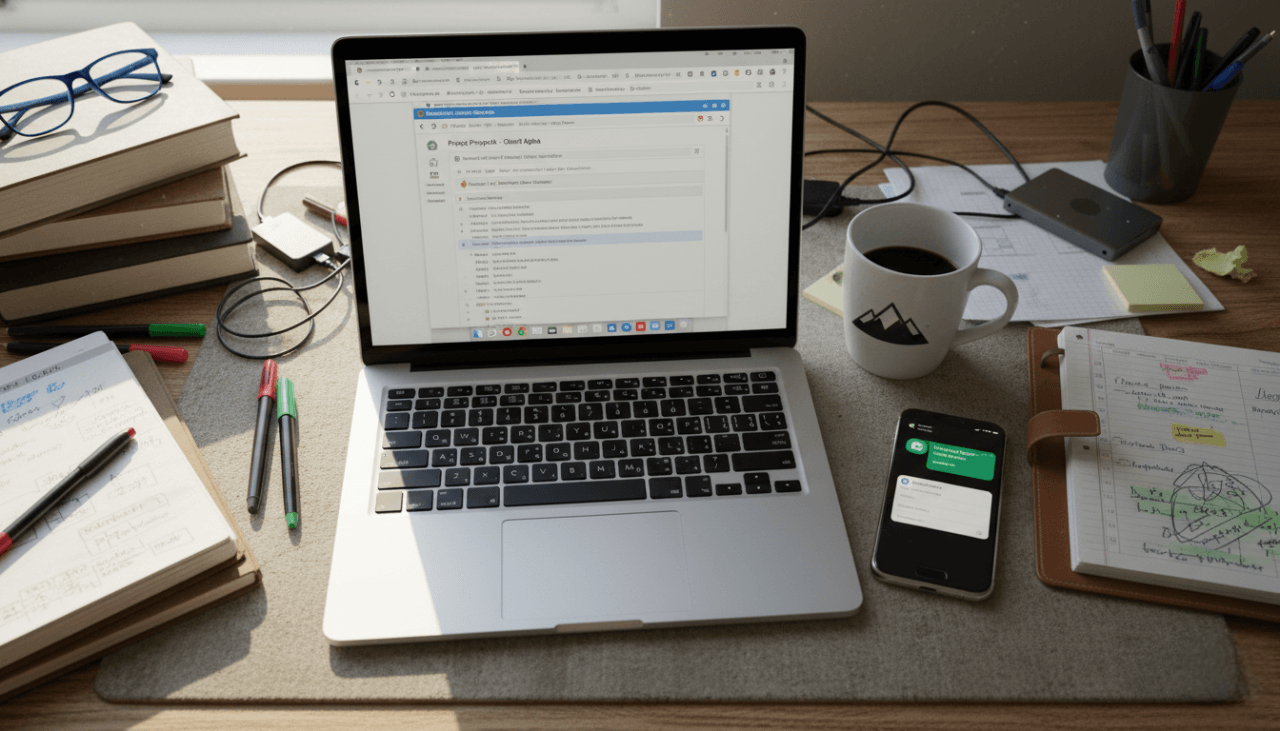
It is always effective to first define the problem before embarking on finding a solution. The time waste that most freelancers have is not normally a result of one obvious source. It is a product of a set of tasks that, on their own, appear to be manageable but, when unified, ends up eating up amazing hours per week. It is important to know what types they belong to to be able to approach them systematically.
One of the most important drains entails writing proposals. Each new project needs a unique approach, and although the essence of what you have to offer is relatively the same one, the process of modifying to that client, their particular situation, clarifying it to be clear and distinctive enough to stand out among others applying applies pressure to time, that is quickly multiplied by writing about it and applying to all the available opportunities at the same time.
Another significant time waster is research; in this case, especially with freelancers, who now need to keep up with the changes in the industry, learn the market of their clients or compile the information gathered by various sources. It can require hours to read, evaluate, and distill the information pertinent to a certain task, which can then be summarized under a paragraph (or two) in the final deliverable.
Combining writing and editing demands vast amounts of time when you are producing something worth writing, but even the work by a freelance writer who is not a writer by profession demands large portions of time spent on written communication: project briefs, status reports, feedback messages, and scope documents all need to be written, edited, and polished. The picture is rounded up by project management, communication with the client, and administration such as issuing invoices and tracking payments. All these categories could be individual trifles but when added together that is when the weight is taken up, many of the freelancers will be taken aback by working way longer hours than they ever wanted to work when they switched careers and decided to work independently. The usefulness of AI tools can be seen in terms of providing relief in each of these categories.
Using AI for Proposal Writing and Client Outreach

Winning new work is the backbone of a sustainable freelance business and submitting proposals is frequently the main vehicle of doing so. Crafting a compelling, proposal-specific proposal with each potential project is time-consuming and, mentally, taxing, particularly when most projects do not instantly translate into work. AI will be able to make this process less taxing and tiresome to be performed by hand into a streamlined working process to achieve dense first drafts in a fraction of the time using much less effort.
The best step you can take is to construct an apparently modest proposal prompt: a lengthy guideline that reads your experience, your usual value offering, how you want the proposal to read, the constructs your proposals always comprise of. When a new client project opportunity arises, you insert the project-related information into this template prompt and create a draft with the appropriate shape and voice already in place, requiring only specific needs to be fulfilled and not a blank canvas to build up. This makes the time of writing proposals to take a very short time without compromising the quality and personalization that clients are responsive.
One possibility is that a starting prompt can be a prompt structure such as: Write an offer to do the work of a [your job] in relation to a project involving a project on [description of project]. The client seeks [what the client need is]. Emphasize experience in [relevant skills] and cite a similar project: [irrelevant example]. And keep to less than 200 words in a professional but non-technical manner. The AI comes up with a strong framework of the structure upon which you work by providing specific details that you are aware of the client in their industry or the specifics of their specific issue. Proposals become real projects and that personalization step is where your professional judgment is needed.
AI can also be helpful when it comes to sending client outreach emails and cold pitches. You can use various templates to write prompts depending on the form of outreach, and customize generated output with particular notes about the work done by the client, the projects they have already been able to exploit, or the problems their industry is struggling with. Such efficiency externalized by AI and specificity added by humans results in outreach that seems very personal, yet 0.1 proportions of the time to write it.
Using AI for Research and Idea Generation

Research is among the most leverage AI use to the freelance profession, as it seeks to accomplish an activity that takes improportional amount of time to its apparent output to the final product. A client can be given an article of 1,500 words, which took him/her three hours to read and synthesize. AI will also be able to reduce that research time significantly, so that you can spend on other more valuable creative work.
The most useful implementation is the quick navigation in an unknown subject with the help of AI. In a situation where a project will require you to speak with credibility concerning an industry you have never dealt with, AI can give you a clear outline of the major concepts, relatively popular terminology, and existing debates in such a field in minutes. This background literacy will enable you to pose questions that are better, as well as create more knowledgeable work far quicker than beginning with all nothing at all.
In content ideation, AI would be especially helpful to solve the blank-page problem. Instead of putting up an angle plan one by one, you can ask the AI to generate ten ideas on an angle on a topic, and sift through them to come up with the ideas that best suit the goals of the client and build upon the best two or three. An invitation such as “BRainstorm ten different blog post topics on [topic] about an audience of [target reader description] focused on useful content” is repeatedly triggered into a menu of viable thoughts within a few seconds. The editorial decision concerning what ideas are worth developing is yours to make. Another useful skill is summarization, as clients may include long briefings or industry reports, artificial intelligence will only interpret the data most useful to you within a short period, rather than you spending all your time reading all the material that does not directly relate to your particular work.
Using AI for Writing and Editing
In the case of freelancers whose core product is written information, AI support when writing and editing a piece is likely to be the most powerful prospective transformative application. Nevertheless, even the freelance whose main service is design, development, consulting or any other skill completely different can take advantage of AI writing technology, as the amount of written correspondence that must be formed within any client relationship is considerable.
The best application of AI in a writing process is not to have it write whole pieces of work, and then publish without editing them. Such practice generates generic work which does not get the specific knowledge, recognisable voice and details that clients are willing to pay. The more efficient way to go about it is to have AI to deal with the structural and mechanical side of writing the rest of the time and work on the content and the quality control. This can be as simple as fleshing out a comprehensive outline you have drawn with the help of AI, creating sketch drafts of specific parts that then get revised by yourself to make them as modern as you can, or performing the clean-up and refinement part once you have created a loose first draft that gives the proper framework of the ideas.
AI is particularly strong in the case of editing and refinement. You do not need to spend time refining your individual draft, but can just paste a paragraph into one of the AIs and request it to convey a particular form of enhancement: Make this paragraph more succinct without losing any vital information, or Structure the flow between these two passages, or Rewrite this sentence to make it understandable to a non-technical audience. These specific editing cues generate precise improvements much quicker than intuitive editing. You are still required to do the last review, as you are the one who should judge what the client is expecting and what standard of quality should be attained though the major work of restructuring and refining is left to the AI.
Ensuring the similarity in tones with various customers is another aspect when AI editing help comes in handy. When you have to work with multiple clients at the same time and they have different expectations regarding a voice or their style of communication, AI may then assist you to put a draft voice together in a hurry and voice meet the intended expectation of a particular client. Even such a quick tip as one that redrafts the piece in a more formal, data-driven style that would suit a business-to-business financial services audience will deliver an adjust version that can be used much more quickly than by hand.
Using AI for Project Management and Organization

Project management is the unseen structure that makes or breaks a client work and results to fast-tracked or deadline missed, scope creep, and scramble work. In the case of the freelancers who are in charge of the multiple projects at the same time and are required to deliver or hand a project to various clients, with varying schedules and deliverables, the organizational load might be truly monumental. AI tools can provide a viable assistance in the planning and tracking of this challenge.
The most potentially directly applicable one is deconstructing a new project into a more detailed tasklist with estimated timeframes using AI. Upon project acceptance, you may provide a project description or a scope to an AI tool and request it to create a sequence of steps with the proposed timeframes of each stage. This is what gives a working project plan within minutes that you can subsequently modify according to what you know about your working pace and the particular project requirements. The presence of such an initial structure on the opening day of a project minimizes chances of timeline issues arising in the middle of project development.
The main areas in which AI can produce helpful drafts within a short time include content calendar, weekly planning and prioritization of the tasks. Instead of investing thirty minutes on Monday morning, recreating your weekly plan and starting with a blank sheet of paper, you can explain your present project load and future deadlines to an artificial intelligence application and request a recommended prioritized plan. The output can require modification, though it provides you with a starting point that is far easier to optimize than one that is built in empty space.
Since the work of a freelancer is likely to be connected with documenting the project in detail, taking notes of the meeting, or outlining the briefing material, AI may assist in organizing and storing the records in a systematic way. By simply pasting unstructured notes of an interaction with a client onto an AI tool and requesting a structured summary with a set of action assignments, one will get a clean, properly organized document in several seconds that could be used as a reliable reference during the entire project. This type of documentation discipline made possible by AI helps to create fewer misunderstandings and manage the scope better, as well as have a relationship that is stronger with the client.
Using AI for Client Communication
Freelance work involves client contact at all times, and communication quality impacts both the success of work at a particular point in time and the stability of future work relationships. The emails should be focused and professional and of an appropriate tone. After sales messages must be continuous but not pushy. Handling difficult conversation such as the scope creep discussions or failure to meet deadline has to be done in a careful manner. All of these situations can be assisted using AI.
With daily communication, AI is good at clean and professional draft creation within a short period. An e-mail update about progress that could normally take a ten minute writing time could be created in less than a minute based on a simple prompt: “Write a friendly e-mail progress update to a client. The project has been 70 percent completed. Our team is scheduled to provide the initial draft by Friday. Add a message requesting confirmation on the final revision requirements. The draft that has been generated generally just requires a slight personalisation before it can be sent.
Another name of tension amongst the freelancers is the follow-up emails where they can only know when they are pressing enough, and when they are being pushy. The AI is able to create a follow up message that is assured and easy to read without seeming to be offensive. An immediate that requests a friendly yet straight forward follow up email in response to proposal submitted two weeks ago and no reply received results in a usable message that stays professional and does not stop the discussion.
In more delicate communicative cases, like dealing with the response of a client on work you dislike, having to talk over extra expenses to change the scope, or to negotiate an expectation where you must spread out a timeline, AI can assist you in writing a response, which you would then carefully revise and change. It is actually a great asset to have a starting point which is structurally sound and professionally toned when your own feelings or time pressure may mean otherwise that you will have less measured an initial response.
Using AI for Invoicing and Administrative Tasks
The group of freelance work that is likely to create the greatest resentment is the category of administrative work, since this is a type of work that is the farthest removed of the skilled work that led you to the independent practice in the first place. Creating invoices, sending mail-outs reminding about payments, keeping track of who owes whom and how long and all the other financial documents are needed and none of that makes them think of good work in the same way as writing a decent piece of writing or creating a powerful image would.
These processes can be greatly reduced in terms of friction. In the case of invoicing, AI will be able to create professionally designed invoices that are specific to your company, assist in the creation of clear descriptions of rendered services, and create the text that will accompany invoices in a professional manner without you having to search for the correct words to use. One of the best applications is payment reminder emails: a friendly, but not soft hand payment reminder that does not hurt the client relationship is a real thing to have a template of, and AI produces them effectively.
Other than invoicing, AI will support habitual standardization and can automate the written tedious part of the administration. Client onboarding forms, project agreement summaries, and documentation of the standard operating procedures can all be written with the help of AI and then improved to be time-saving templates that will save time on every subsequent engagement. It is aimed at having the work of assembling these systems done once with the assistance of AI and get to save time on every new project.
A Step-by-Step Plan to Integrate AI into Your Workflow
It is useful to know what AI can perform, yet the most frequent difficulty of most freelancers is actually starting their journey. Trying to redefine your whole working process simultaneously is a sure way of frustration and giving up. The more responsible strategy involves a planned gradual integration which yields visible output at a pace that is high enough to encourage further implementation.
The initial move is to figure out your largest time drain. Take a day or two, and consciously spend time tracking time spent on things that you can do repetitively or always find the time to get to. You have to start with the task that vexes you the most or takes you more time than it should. Starting with the issue that annoys you the most is the guarantee that the initial outcomes of AI implementation will be significant right away.
The second one is selecting and using two or three tools and not fifteen. One of the most likely causes behind the failure to adopt AI is tool overload. The amount of time that is wasted in time testing and changing a myriad of tools is more than what the tools are consequently saving. General-purpose AI writing assistant, an organization tool, and one communication helper are the three categories that have the main cases generally effective to freelancers. The third one is to develop a library of reusable prompts. Consider prompts templates: as soon as you have created a proposal prompt, a blog post outline prompt, a client update prompt, and some more that fit your workflow, you will never need to start working with a blank page. Store them in a document that is easily accessible and perfect them with age. This is the timely library that is enlisted as one of your greatest professional assets.
The fourth is the planning of a minimal end-to-end workflow which traces AI support to every phase of a conventional project. The proposal draft is created when a client inquiry is received by AI. Upon confirmation of the project, the task breakdown is created by AI. Throughout the working period, AI is used in research, writing, and editing. During delivery, AI writes the email that comes along with the delivery and once this is done, AI writes the email containing the invoice. The fifth one is of establishing quality checks in your workflow early enough. AI commits the factual error, it sometimes generates a general outlook, and it also lacks the finesse, which may be important to clients. A normal review process including fact verification, tone change and quality assurance will save your reputation and also make sure that the gains of efficiency is not at the expense of quality.
A Two-Week AI Implementation Plan
And a two-week plan with a structure helps you practically plan your way out of the awareness and integrate into the active side of the process without feeling overwhelmed.
On the first and second days of the first week, just observe. Keep a time log and be able to see the three to five tasks that give you the most time or cause the most frustration. List them out in specifics, not just as writing, but as writing payment reminders, not just as writing, but as creating first drafts of client blog posts. Such particularity will serve as the guide to all that will follow. Test AI tools on days three and four, against two of your priority of most important tasks. Be not too perfect: be familiar. Run a few prompts, be truthful to the results, and observe where the AI is doing better than anticipated and where it requires additional directives on your part. On five through seven days, develop your first prompt library. Drafts five to eight asks you to think about your most common tasks and test them, and then work on them until they regularly give you useful drafts.
In the second week, switch testing to actual application. At day 8 and day 9, apply your new AI workflow to a real life project, not a theoretical project. You can listen to where it is saving meaningful time, and where the workflow continues to have friction that requires consideration. Review your prompts on days ten and eleven, with what you learned real, and make changes as needed to your workflow design. At twelve, fourteen or thereabouts, you should now have a workable, verified AI workflow that you can repeatably apply to your current work. By the end of week two you will not have a perfect system but a good enough system that you will actually use as opposed to stashing away.
Pitfalls to Avoid When Using AI in Freelance Work
The advantages of using AI are genuine, as are the risks when handled recklessly. Understanding the most typical traps will allow you to evade those errors that compromise the quality of your tasks and the reputation of your profession.
The greatest risk is over-reliance. Freelancers utilizing AI content without making any true professional judgment become increasingly reliant on a tool devoid of contextual awareness, creative thinking, and expertise in the field. AI is the most effective when used to enhance your knowledge as opposed to displacing it. All AI-generated work coming out of your desk must support your professional values and your understanding of the particular circumstances of the client.
False data is an ongoing and a severe threat. AI software is capable of saying false things with full certainty, and lacks any way of communicating that it is unsure. In the case of any material which contains definite figures, technical assertions, or factual statements that clients will act on, independent recording to sources of authority cannot be compromised. Any one serious factual mistake could ruin a skilled relationship, months to develop.
Less dramatic, although still consequential, is a quality risk in the form of generic output. AI inherently pulls towards general language usage that does not fit any specific voice best. When you provide generic content that gets read as such, the clients will eventually pick that up and the value they have attached to your work decreases. Personalizing all AI items to specific examples, unique phrases, and best practices out of your background avert this. Even data privacy is worth a mention: transferring sensitive client data to open-source AI can be quite dangerous. Process anonymized copies of sensitive data in prompts and look through the policies of any tool you use routinely with client data.
Ethical Considerations and Professional Standards
Since the increasing popularity of AI tools in professional processes, questions of transparency, of attribution, and of professional ethics have become extremely important to be considerate of by freelancers. The responses cannot be made always that straightforward and various customers, fields and work situations possess various norms and expectations.
Honesty can be described as the most crucial principle to be asked on the question of transparency. It is important to note that a few of the clients have requests to know whether AI was imposed in creating their content or deliverables, when it is a question directly posed by the client, it is morally right and tactically prudent to answer it honestly. Any misrepresentation of your process, had you realized it, is even more destructive of trust than would otherwise have been done. The given question is not opposed by many clients, who just want to know what they are paying and how it was created.
Being professional is important so that even AI-assisted work will be on the same level in terms of quality as fully human-created work. The fact that AI wrote a first draft is nothing that lessens your obligation on the finished product. The quality of the product is being attached to your professional reputation, your name is on the deliverable, and your client is resting on your knowledge to make certain that it is effective in the servicing of their needs. The saved time using AI should be spent on the quality control, strategy development, and the type of value addition that will earn your rates to worth.
Awareness on plagiarism is also worth sustaining. Sometimes AI-generation can copy phrases that are nearly identical to their published counterparts, especially when it comes to those issues that are overrepresented in the training material. To prevent yourself and a client from being sued, in cases where originality is important (such as when publishing content under a brand name owned by the client), or where the use of an AI-generated draft involves some plagiarism (as reported by a plagiarism detector), writing your texts yourself in your own words seems a reasonable precaution that will protect you and your client.
Choosing the Right AI Tools for Your Practice
The AI tools market to freelancers and knowledge workers is vast and rapidly expanding and, at times, not an easy one to navigate. By comparing tools to an established set of standards, you can determine what tools will effectively form part of your workflow and which will introduce a level of complexity without proportional utility to the tool itself.
The initial question you need to ask about any tool is that whether it has a practical, specific issue in the workflow you are currently working. The tools that cover work you genuinely accomplish regularly and find exasperating will bring apparent utility in a brief timeframe. The tools that fix a theoretical issue or an edge case that you hardly ever see will remain dormant once the novelty of those new tools diminishes.
The second dimension of evaluation is that of cost against time saved. An application you can buy that will save you two billable hours a week at twenty dollars a month will pay back many times over. An identical tool, which saves fifteen minutes a month, does not. Then work out the actual value of the tool in real-life time, and re-work that computation in a few months to make sure the tool can still pay its own way as your enthusiasm as a new thing subsides into daily service.
The ability to work well with your existing workflow is more important than the richness of individual features. The tool that is most used, i.e. the one you will use regularly, is the best tool, and not the one that has the fanciest set of features listed on it. A tool that you use day to day is more valuable than a more complex one that you avoid since the learning curve is too difficult or the learning is too cumbersome.
Conclusion

AI will not work like magic to change the business that you are currently doing as a freelance and it will not substitute your skills, interaction and judgment that make your job worth doing. However, when applied carefully and consistently, it can radically positively transform the way your business works: you become able to spend less time on low value repetitive jobs, you produce more output of a higher quality and uniformity, and you find yourself able to free up hours per week that you can rerout to the business that really needs your skills.
The AI winners are not the freelancers that turn automated and outsource all their work processes. It is them who recognize the nature and kinds of work in which AI support is most advantageous, develop highly genetic systems around these work areas, overseeing strict quality controls on the content produced by AI-driven tools, and constantly improving their tactics in an international context based on their experience of actual operation.
Start small and specific. Identify a task that you regularly spend more time than you need it to and test AI help on that task by itself. Create a certain system on time, create a specific habit of quality, and assess the quantity of time being saved. When that initial integration becomes instinctive and fruitful, start on the next job. During weeks and months this gradual, progressive practice cracks a workflow that is purposefully accelerated, more uniform, and less intensive than your previous. You are still basing your freelance business on your skills and expertise. AI is the plumbing that will allow you to use those skills more effectively and with less drag than ever.