The Complete Growth Strategy Guide
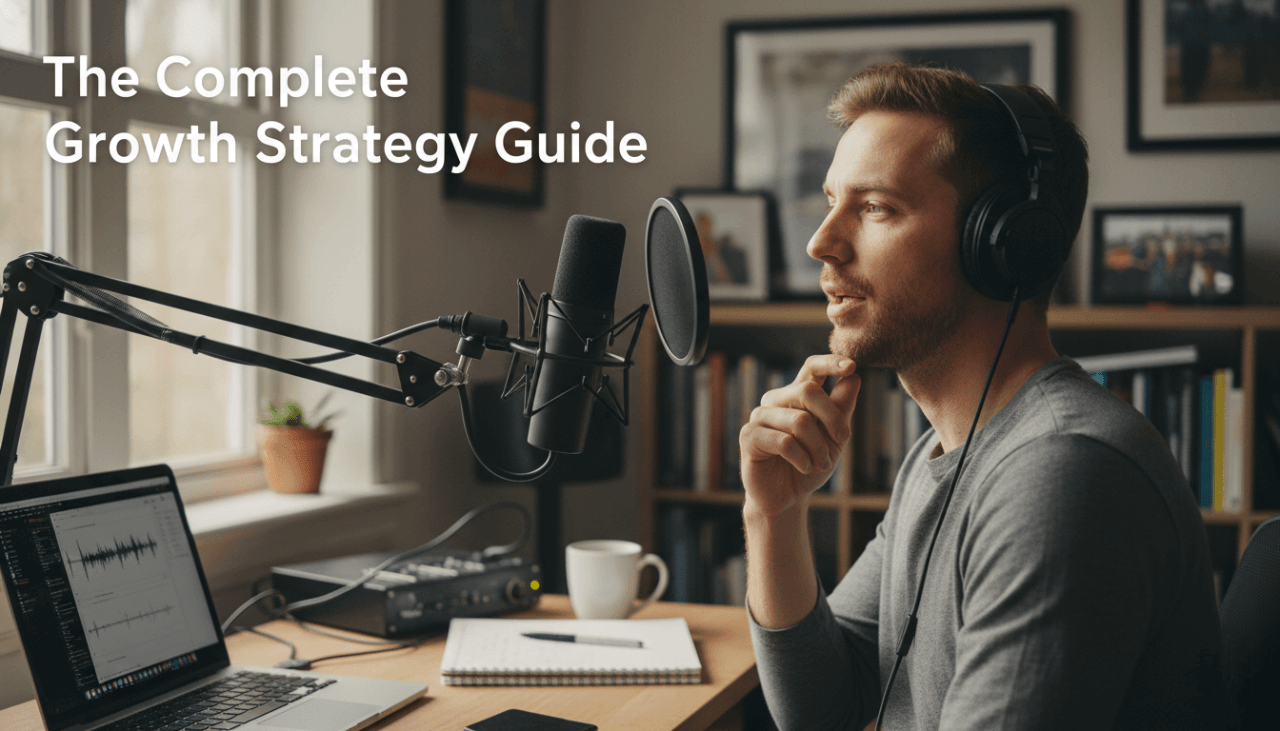
Podcasting is already one of the strongest means of sharing ideas, gaining authority, and reaching audiences worldwide. It is a small-scale format, adaptable, and able to develop the sort of loyal audience base that is difficult to achieve by other types of content. However, it is not enough to make a great podcast. The actual problem is making people find and regularly listen to your content, and the social media helps to make it a true game-changer.
To achieve a consistent growth of your podcast, find regular listeners, and future income or a change in their lives, you must also see how to promote your podcast in social channels. This guide reveals to you all you need to know starting with a proper foundation and high promotion techniques that provide tangible and long term outcomes. All the steps are manageable, realistic, and suited to each step of growth of podcasters.
Why Social Media Is Essential for Podcast Growth

The use of social media does not just ought to be a promotional instrument which you apply once you have completed the recording of an episode. It also serves as your main mechanism of distribution with the ability to reach those audiences that would not have discovered your podcast on directory searches. The podcasting providers such as Spotify or Apple Podcasts are highly dependent on searching, which implies that the first-time listeners should already be on the hunt to find something in particular in order to accidentally discover what you have. The social media breaks all the boundaries, and your content is right before anyone who never even realized that they needed it.
Visual advantages are far further than mere visibility. With social media you can be in direct contact with your listeners and you can transform passive experience to a constant two way dialogue. It provides everything you need to create brand awareness in the long run, making you an expert and a reliable figure of speech in your industry. It permits you to produce one podcast episode as many items of content that are cross-platform and format-explosive in a single recording session and ensure that the products of all your recordingke can work cross-platform and cross-format at the same time. And by far, most importantly, it enables you to build a following of loyal followers that will become one of your most valuable assets in terms of growth because of their support and personal recommendations. It does not matter how great the podcasts are produced: the lack of social media makes it even harder to promote them in a meaningful way.
Step 1: Define Your Podcast Brand and Audience

In this regard, you must be perfectly clear on two issues before you lay a single hour of your life to promote your podcast: whom your show is addressing and what it represents. Directionless promotion is not only inefficient, it is worse still, it is active waste to the time and the creativity that goes in to it. The content that appeals to everyone appears to appeal to none and unless you have a clear image of your ideal listener then you can create the targeted and relevant content that can drive actual growth.
Get by identifying your target listener as specifically as you can handle. Consider how they are, what issues and concerns they bring to the products they view, what types of formats and topics they follow without difficulty and in what mediums they spend the most time. Such responses will guide directly all the next choices that you will make regarding your promotion plan, what platforms to focus on and what tone to use in your captions.
Together with your audience definition, create a coherent and strong brand image concerning your podcast. This is finding a recognizable niche or a subject matter, having a specific tone or voice that will be present in all your content, creating and maintaining a visual appearance, such as colors, fonts, and graphic designs, making your podcast name and cover artwork create a powerful and memorable first impression. It is the consistency in all these factors that creates trust and familiarity in the long run. When one stumbles on you on Instagram, then comes to Tik Tok, then scrolls over your thumbnail in an app where you have your podcast, the visual and color harmony is the message that one is dealing with a professional person and can remember your show better.
Step 2: Choose the Right Social Media Platforms

Trying to be active on all the social media platforms at the same time is one of the most typical errors that the podcaster may do in the initial days of making their mark in the promotion process. This strategy dilutes your time and creative resources, and ends up with mediocre content on too many platforms as opposed to having truly good content on a small number of those. It is more useful to find out where your target audience is likely to spend their time, and focus on it especially during the initial stages of gaining your following.
Instagram is also appropriate to the classes of podcasters whose material is best conveyed to visuals and short-form video. It is particularly effective with audiograms, Reels, quote graphics drawn out of highlights of the episode and behind-the-scene shots of how you recorded the episode. The site compensates good aesthetic quality and favors creators who can express the value of their podcast visually.
Tik Tok is the fastest growing organic discoverability and viral platform at the moment. Its algorithm actively gives users content that have never subscribed to a particular creator, meaning that one engaging clip can attune your podcast to thousands of possible new viewers without paying to promote it. Even short videos of your episodes, informative bites, and information can be good on this platform and feature powerful introductory hook.
The other platforms lack something that YouTube has, and that is long-term search discoverability. The usage of the internet in the form of videos released on YouTube is becoming a great investment when measured in terms of viewers and new subscribers months and even years later and this makes it a great investment to consider by the podcaster who wishes to add a video component to what they are already producing. Individual episodes of the podcast, videos, so-called Shorts on YouTube also belong to a YouTube-based strategy of podcast promotion.
X is still a reputable tool of podcasters who intend to attain thought leadership and real time conversations in their niche on Twitter. By uploading the insights and some controversial thinking of your episodes, trending and engaging many discussions in the field that are timely to your topic, and establishing relationships with other creators and industry voices, all play a role in establishing you as an authority. Another role that is taken on podcasts that target a professional or industry-oriented audience is fulfilled by LinkedIn, which provides a community of professionals to gain access to experts and industry insights. It is much more productive to start with one or two of these platforms and grow and build your systems before you do it all simultaneously.
Step 3: Create High-Quality Shareable Content

Promotion of podcasts cannot be conducted by posting the links on the episode and hoping that people will visit them. It is the production of content that stands by itself, content that is interesting and worth reading, encountering, worth in a way that parties will listen to even without listening to your podcasts. All of the social content that you produce must act as a true introduction to your show, something that can make someone think, feel, or learn something at first glance.
One of the best examples of introducing the content of podcasts to a social media audience is audiograms that are brief audio files with moving images and captions. They simulate a preview of the real listening experience, but are preoptimized to the visual aspect of social feeds. Video clips that present the most interesting or shocking moments of an episode have a similar purpose and are specifically good on Tik Tok, Instagram Reel, and YouTube Shorts.
Quote graphics take a strong or emotional quote out of an episode and make it visually represented, which means it is extremely likely to be shared by people who would relate to the concept. Instagram and LinkedIn carousel posts give you the ability to split a complex subject into a row of consumable slides, which are of true value to a reader and, naturally, makes people engage. Behind-the-scenes material makes your podcast more human and creates a connection to a person and process, as the person and process are now real. Released teasers of your episode prior to the release of an episode create anticipation as well as provide your current followers with the incentive to look out when the notification of the full episode is made. The point is that there is enough unprocessed material in a single episode of the podcasts to produce a significant number of individual pieces of content that would be optimized to different platforms and different types of viewers.
Step 4: Master the Short-Form Content Strategy

Video content of short formats is now the most effective and dependable method of building a podcast audience through social media. Social media such as Tik Tok and Instagram Reels have conditioned viewers to make clicks about the value of their content at first sight, i.e. the initial seconds of each piece of content you post holds extremely high weight. One of the skills of utmost importance that a podcaster can acquire is the ability to organize short-form content in the most efficient way possible.
Each clip is to have a hook which attracts attention in the first place and leaves the viewers with a reason to watch. Such expressions as, Nobody speaks about this, but… or ruining your deal of one thing…. or What the majority of the population gets mistaken about… work as they make one curious and make him think that the viewer will soon comprehend something really worthy. Following the hook, the clip must remain narrow-minded as opposed to attempting to cover all grounds with captions being provided to make the clip accessible to the audience who may not be watching it with sound. Most short-form podcast clips should range between fifteen and sixty seconds with a conclusive call-to-action pointing the viewers to the full episode. This type of clip organization is always effective at encouraging discovery and introducing new listeners to your podcast daily as long as such a clip continues to circulate on the site.
Step 5: Post Consistently and Use a Scheduling System

Agency in social media growth is not an option but the means through which increase will actually transpire. The algorithms on all significant platforms richly reward regular posters and reduce the reach of inconsistent posters by penetrating them. More to the point, viewers learn to be addicted to creators that they subscribe to and a consistent schedule of postings gives the illusion of a dependable presence that makes your podcast stick in peoples memories.
In the case of such platforms as Tik Tok or Instagram, one to two posts a day is the scope, which usually brings a good algorithmic reach without making your content base run out. Three or five posts per week on LinkedIn and Twitter would usually be the most productive in establishing a consistent presence without spamming your professional audience. On all platforms, the release of every new episode of the show should be central to a flood of promotion, in the days prior to the launch. The tools to schedule your postings in advance and manage them efficiently to maintain this level of compatibility are mandatory without having to spend hours a day posting on your social accounts one at the time. Pre-creating your content during specific periods of time and planning it throughout the week is much more sustainable compared to the idea of creating and posting in real time.
Step 6: Optimize Your Content for Engagement
The aspect of engagement through likes, comments, shares, saves, and replies is the indicator that the social media algorithms apply to the content to see how far it should be popularized. A post which has good engagement is displayed in front of more people whereas a post with insignificant interactions is suppressed. This implies that being proactive and creating your content in a way that helps to engage is not a nice-to-have feature; it is an ingredient of a successful promotion strategy.
One of the most basic and the least complex methods of starting the comments is to ask real questions in your captions. Asking your listeners to provide their views, encounters or even disagree with a statement made in an episode will provide them with a motivation to engage with it other than by merely provide a dual-tap response. Instagram Stories deserve special mention with respect to polls and interactive stickers that provide an extra layer of low-friction engagement and ensure that your audience will stay engaged between release of episodes. The reply to all of the comments and especially the initial portion of building your following serves as an invitation to the algorithm and your followers that you have an active and engaged account that is worth interacting with. Relatable, emotionally engaging or really shocking content will have a higher likelihood of being shared organically than information-focused content, so consider a point in your episodes that will become something people will want to share the clip with the friend.
Step 7: Use Hashtags and Social SEO Strategically

Tools of discoverability include the use of hashtags and optimization of key words, which assist in getting your content before people who are not yet followers of you are also searching or otherwise consuming content within your topic field. When used in a considered and respectful way, they can provide opportunities to increase the reach of every post beyond your own audience measurably.
In the case of hashtags, the most powerful strategy is a combination of a few niche-specific hashtags with a few broad categories ones, usually ranging between five and ten hashtags. Exceptionally wide, massively used hashtags such as podcast or motivation place your content in a very vast pool that would hardly likely be found. More targeted labels that describe your actual niche will put your content in front of a limited group of people but very relevant. Social media SEO, specifically using social networks such as YouTube and Tik Tok where search repetition is becoming an important part of social media habits, implies incorporating natural and searchable keywords into your caption, video titles, and descriptions. When you write the type of contents that your target audience writes in the search results when they search in your space, the chances that your posts will be included in the relevant search results get high as time goes by.
Step 8: Collaborate with Guests and Influencers
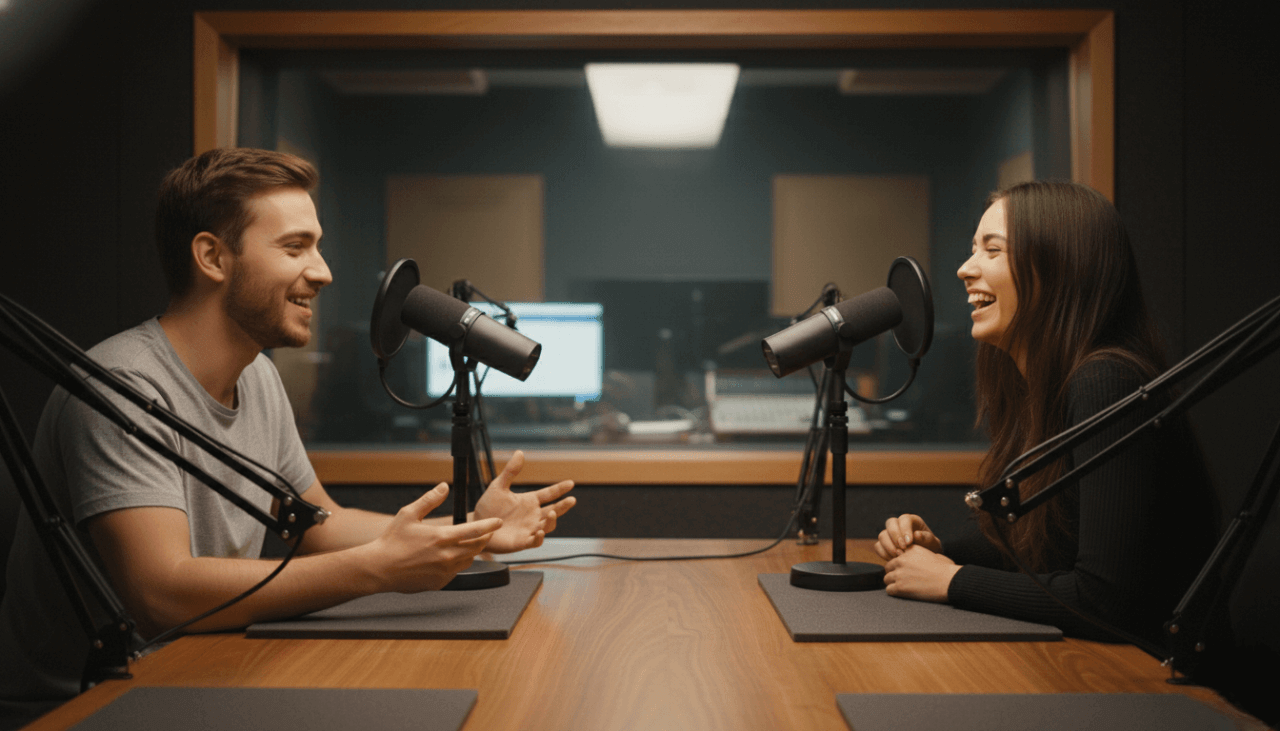
One of the leverage growth strategies that can be applied by podcasters and is never fully exploited is collaboration. Each guest that you put on your podcast is also a potential distribution partner that has their own established audience, and the manner in which you handle the promotion of your guests in the days after an episode release could make the difference between an episode going viral or not over social networks.
As a guest, publish you an episode, give them a set of pre-created elements: clips, quote graphics, and audiograms in their most popular sharing formats. The simpler you make it to share things with your guests, the more chances you have that the guest will participate in sharing. Pin them in your posts and tell them to promote the material in their audiences. One individual with a large audience who marketed an episode can get your podcast known among thousands of new potential listeners in a day.
Other than guest promotion, it is worthwhile to seek partnership with fellow creators in your niche to create more avenues of growth. Cross-promoting one another, creating content on each other, or co-making social content to discuss common topics are all strategies that enable both sides to find an audience that is not accessible to them. The development of these relationships is difficult and time consuming but the payoff in terms of development in your life could be significant.
Step 9: Build a Community Around Your Podcast

The difference between the large audience and a loyal community is quite substantial. Massive audience is composed of individuals that consume passively what you offer. Those who are sincerely invested in your podcast and both in one other, are the people who market your podcast to their friends, consume your content out of the blue, and are dedicated to you during the organic up and down of growth, constitute a loyal community. The podcast with a small yet thriving community will always win against a big but indifferent crowd in regard to downloads, word-of-mouth promotion, and sustainable performance.
As an organizer, this should be done by creating special group spaces specifically to discuss the pod with your most active listeners a Facebook group or a Discord server is a good place to create such a space and to connect with members of your community around the same interest you have provided them by listening to your podcast. Being an active member of these spaces yourself, answering questions, positive reinforcers, introducing listener feedback and questions to your real episodes, enhances the sense of connection that makes people feel engaged in the success of your podcast instead of being merely entertained by it.
Step 10: Use Calls-to-Action Effectively

A call-to-action is the lesson you tell your audience on what to do after they have read a piece of your work. It may seem rather straightforward, and between the social content that turns the viewers into podcast listeners and the content that merely passively engages the latter, the distinction is often associated with whether a clear and convincing call-to-action is part of the latter.
The best variant of call-to-action is specific, focused and has a logical relationship to the content being presented. A good video providing valuable information to people would leave them with a clear reason why they have to follow the page and watch more clips of equal insight. After a teaser does the trick of creating curiosity, it would only be natural that someone is asked to go to the link in bio and listen to the entire episode. A request to go and tell a person, who needs to listen, makes your current audience a second channel of distribution after an emotionally compelling clip. When the call-to-action is included in the same content as the piece of information or its variants, and there are not multiple times of competing directives, the results will be better all the time, as the viewer will have only one decision to make, which is the simplest one.
Step 11: Repurpose Every Episode Across Platforms

Repurposing refers to the act of changing one piece of content into several forms that will be useful in various platforms and is also dependent on the nature of consumption. It is among the most valuable efficiency techniques of a podcaster, as the unprocessed material inside a lone recorded episode is truly rich enough to generate a decent dose of social media posts, without the need to do any further recording or research on it.
One episode of the podcast can potentially generate up to five to ten TikTok, Instagram Reel, and YouTube Shorts. It has the ability to create three to five quote graphics on Instagram and Twitter. It is transformable into a long-form blog post which makes search engines sales. It is able to deliver the contents of an email newsletter to your list of subscribers. All of these pieces of content would reach out to a different group of people, through a different channel that would have a larger reach than any given single platform can deliver. By coming up with a regular process of repurposing following every episode release, you will be utilizing to the fullest its intent to use the resources that were used to record and produce the original (content) in the first place.
Step 12: Track Your Performance and Refine Your Strategy

It is always extremely necessary to publish content regularly and make it discovery and engagement-optimized, yet none of it can yield the best possible results unless you have an artificial feedback loop embedded into your process. Monitoring your performance measurements on a regular basis will provide you with the information you require to know what works, why it works and make a conscious decision about how to do more of it.
The most valuable measures to keep track of have been the engagement rate on your post, the growth rate of the followers with time, the number of views and completion rates of your video, number of clicks on the links leading to your podcast and lastly, the actual downloads of your podcast. Data trends will help to see what types of content is the most effective with your audience, what subjects elicit the most feedback, what sites are attracting the most real listeners and what time of the day are you posting are yielding the highest response. These insights will help you create and post continuously to test what works, not what you think will work.
Step 13: Avoid the Most Common Promotion Mistakes

It is equally important to learn what not to do as it is what to do because most podcasters are spoiling their own progress by a minor number of recognizable and preventable errors. The worst thing to do is to post no more than links to episodes. The simple link to a podcast episode leaves a citizen of the Internet ecosystem with no incentive to make a click as they do not know yet whether your content is useful or applicable to them. Each of the posts must offer something, a clip, an insight, a question, or a story, that will serve to prove your worth before you request the time of the listener.
Another major mistake is that of overlooking involvement. Taking time to comment on your material and fail to reply, sends the message to the audience, which demotivates them to engage in the process further. Irregular posting undermines the gains you have made on that since platforms will refuse to prioritize your content, and audiences will be inclined to stop searching. Posting without knowing what is really relevant or interesting to your audience is the same as even really good posts will not bring a reply that they should have received. And making the promotion of your podcast a permanent activity without any independent value in between makes your social presence to be an unending commercial instead of a destination worth visiting.
Step 14: Stay Consistent and Embrace the Long Game

The value of social media development of sustainable podcasts is never a race, it is a long-term undertaking, which will provide fruits after the passing of time, patience, and readiness to continue promoting the process, though initial outcomes might seem insignificant. The vast majority of the successful podcasters look back at the first few months and recollect how they created work, which seemed to be going nowhere, and how at some point they began to slowly build up. The only people who get to compound are the podcasters who never gave up but remained constant enough to achieve this.
By prioritizing growth over the immediate increases in views or following you see in the short term, you will maintain your efforts in areas that result in audiences sustained over the long term. Treatment of low engagement post as a data point that contributes to your next attempt instead of failure is a way of keeping your mindfulness productively opposed to discouraging. The habit of continually enhancing the quality of your content, deepening your knowledge of your audience, improving your analytics is practices that over time have an accumulative effect to form a social media forces that can continue to drive meaningful podcast growth in an ever-growing way. Those podcasters who have succeeded are virtually those who never gave up.
Conclusion

It is not about the luck to promote your podcast on social media, and it is not about going viral within a certain platform. It is regarding establishing a sustainable approach based on the audience insight, steady content production, authentic engagement with the community, and the unceasing enhancement. The 14 steps of this guide cover each of the key dimensions of that strategy, such as the decisions related to branding and choice of platform base already and the operations related to repurposing and scheduling, along with performance tracking that should proceed continuously.
The social media enables the podcasters the ability to market their shows to thousands and ultimately the millions of potential listeners who would otherwise not have found their show by simply browsing through the directories. That reach is achieved by working hard, experimenting, and having a true dedication to creating value at each point of contact. Begin with a clear strategy that is formed around your particular audience and the media they are using. Be there long enough so that it becomes momentum. Continue improving on what you have learned and practice. People should listen to your podcast, and having a particular social media plan, you will be able to be sure that this podcast will reach the audience that is targeted by it.