How To Start Blogging In 2026

The misperception around the idea of blogging being a career is that one must be an excellent web writer in order to do well. Nothing can be far otherwise. It is the personal inclination that makes people read blogs so most bloggers write in a very conversational tone. Moreover, many successful bloggers post on the same blog on various subject matters as a result of the format. Being a good blogger, you do not need to be a professional in a certain field, yet the lack of knowledge and the interest in a particular topic can be a significant benefit. Naturally, should you have a specialization in the area of health, finances, technology, to list a few, it will be manifested in your blog and on its contents.
The only thing you need to be a successful blogger: one should be passionate about whatever he writes. Get this guide, which reveals how you can be the blogger of 2026, beg to write on the web, and specifically on blogs, what you must know about search engines and other necessary blogging and professional applications.
The majority of the marketers are interested in blogging to raise brand awareness and develop leads. Need to launch a blog to advertise your marketing or self brand? This article is for you!
A better way to simplify matters, of course you can hire an SEO writer and get her to make content about your new blog.
You will find even the tools, useful tips and advice to start your successful blog in 2026 regardless of whether you are a novice blogger or an expert!
What is a blogger?
A professional blogger is an initially self-employed person or a legal business that engages in daily on blogging. This practice and career is implemented with the help of a blog (site) and an array of social networks and digital applications.
As easy as it may appear after seeing the social media posts covered on the topic, sometimes becoming a professional blogger could mean being disciplined and patient and you might have to work, train and sacrifice a lot before earning a living or achieving your dream of making money off your passion.
There are several sources through which a professional blogger makes money such as:
- Revenue in approaching advertising (you now know about Google AdSense )
- Collaborating with brands and sponsors (as the case with YouTubers does).
- Product or an online trading that pertains to the subject of the blog.
- Community direct compensation ( donations, subscriptions, VIP badges, etc.).
- Making cash via the site (other revenue)
Why consider a career as a blogger?

The genres may be to write an article on something close to your heart, write about your passion or maintain a journal about what you are doing, all reasons are good. A blogger has a lot of individual motives to begin a blog and they are not likely to alter in the near future.
The advantages that a blog can bring
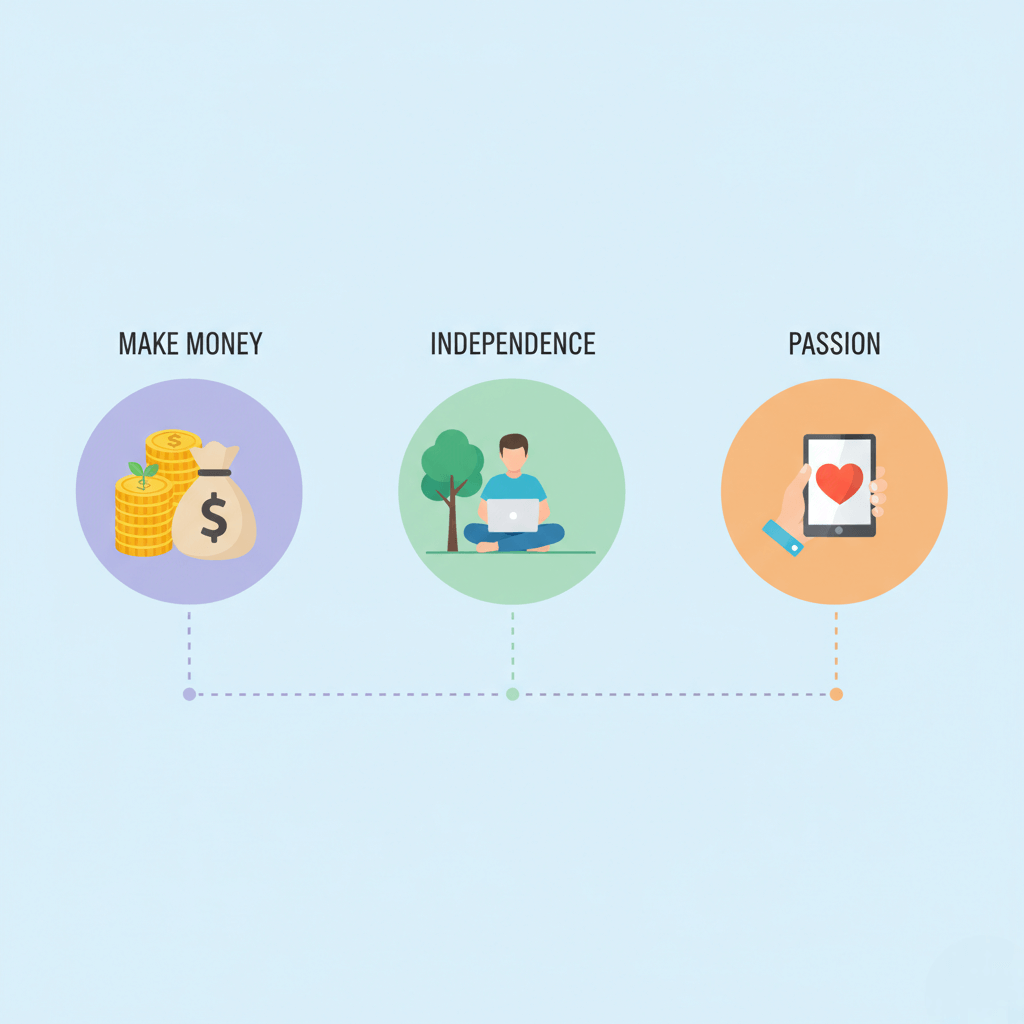
On top of personal motivations, it does not represent a secret that blogging can also make you money . Blogging has still been one of the most lucrative methods of earning income over the internet.
1. Make money from your audience
Even though it is true that you can make money out of your blog it is only not the cause to write one. Money blogging is actually a long process, and it consumes a lot of energy, it is not easy to remain motivated on a daily basis.
2. Independence and personal development
You can choose the look and feel of your blog on your blog. Provided you can be irritated by some things that are common online, this is an opportunity of being a good example. You too can create your niche of the internet in the way you desire it to appear.
3. Passion above all
However, unlike nearly everyone, you will get an opportunity to work in the area that is of your particular interest: travel, beauty tips, reading manga, childhood interests, day-to-day well-being, etc. There will be no boundaries that will restrain you and the blog will be an active presence of your passion.
Among the many benefits that can be intuitively oriented to using this guide to become a professional blogger, we have been able to mention three.
Creating a blog – how to start a blog: steps to follow
In case you wish to be a professional blogger, it is essential to take a course or at least learn the major steps to follow. These are the basic things you should know to get going with creating and maintaining a blog.
What tools are needed to start a blog?

The very first course of action to be taken in starting up a blog is to decide on the platform that would be used to host your site. The tools available in the market are numerous; however, we will discuss the two most popular the WordPress and Wix.
Starting a blog with WordPress

WordPress generates 35 million webpages representing 43 percent of the online! This is a free and open-source tool that would qualify as a world leader in content management systems (CMS), and it can be installed on your own server or headquartered hosting.
WordPress provides the user with a customized blog, enabled by a large amount of ready-to-use themes and hundreds of available plugins to insert your graphic charter and your companies logo.
Its pro features combine all the required options to make your site search engine optimized, safe, social, and so on.
Despite the fact that WordPress is user friendly, due to intuitive interface, and the fact that the community is friendly enough to respond to users, to be able to maximize the power of this CMS, one needs some basic knowledge of HTML and PHP.
Starting your blog with Wix

Wix has transformed the way of creating blogs with more than 200 million users. It is a complete solution that allows one to build a blog without the need to write code. Hundreds of ready-made themes can be selected, and they can be customized with a basic and easy-to-use visual editor.
The software also features the means of managing your blog A to Z, including commenting system, editorial calendar, traffic statistics, SEO options etc.
Wix is the most appropriate platform when one needs a fast and affordable way of creating a blog within hours.
Choosing the target audience and theme of the blog

The next step is to select the editorial theme of the blog after selecting the platform. Who will it be aimed at? What topics will it cover? What is your primary aim of your articles?
Generate Traffic
Would you like to develop a blog in order to drive traffic to your site? You will have to have content that appeals to most of your target audience and will address their issues or necessities.
As an illustration, when you are selling organic cosmetics, you can form a blog on natural beauty, recipes, how to take care of your skin using plants, etc. As well, you need to aim at the specific and hot words that will enable you to be included in search engines of men and ladies seeking organic beauty products.
Generate leads
In case you wish to create a blog to lead the way i.e. pros who can be potential customers, choose a subject that is directly related to whatever you are offering and what your knowledge is.
As an illustration, a personal development coach can establish a blog on personal growth and self-confidence, stress management, motivation…
To supplement articles and lists of advice, it is advisable to use high value content, i.e. ebooks, white papers, programs, etc. which will convince the readers to leave their contact details and, in some cases, to subscribe to your newsletter.
Informative blog
If you want to create a blog to inform your readers about a subject that you are passionate about or that you are knowledgeable about, the theme will present itself.
For example, if you are a film fan, you can create a blog about the behind-the-scenes of the seventh art, film reviews, actor interviews, etc.
The goal is to offer interesting and entertaining content, to bring together a community that shares your passion. These loyal readers will want to share your articles on their social networks or link to them on their own blogs.
Informative Blog
The theme will occur in case you want to start a blog to inform your readers on a topic that you are passionate about or a subject that you are aware of.
E.g. in the case of a movie enthusiast, you can have a blog on the behind the scenes of the seventh art, movie reviews, actor interviews, etc.
It is to provide content that is entertaining and interesting, to build a community of people who understand your passion. These ardent readers will be interested in writing about your articles in their social networks and post their links to their respective blogs.
How many articles should you start a blog with?

The main question that the novice bloggers tend to pose is the following: how many articles must I kick off the blog? One cannot provide a universal response to this question because it is subject to various factors, which include the nature of the blog, the frequency at which it is being published, length of the articles among others.
But this has a rule of thumb: one should have at least one article in each major category. Specifically, in the case of a food blog you can have categories such as appetizers, main courses, desserts and drinks etc. Thus, you should have one piece of content of each category to demonstrate your readers just how diverse information they will see in your site is.
How often should you publish on your blog?

The Internetlivestats estimates a post every minute on blogs with about 7 million posts being made daily. Naturally, this is quite time-consuming when you have to post the content on a daily basis, not to mention that there are other responsibilities that need to be handled. No one answer can be given concerning the optimal posting frequency. It is based on what you want to achieve, when you are available, on what you are writing about, and so on. But to gain audience loyalty and realize results, it is worthwhile to post regularly at least once a week.
This regularity will enable you to keep in touch with your readers, will keep your blog current, and will raise your position in search engines (indirectly, your business). In order to stay consistent, expect yourself to be organized as a freelancer or structure yourself as a marketing department and can publish as often as possible.
How to produce content for your blog?

It is not always very easy to create content particularly when making a blog. The following are the tips that can assist you in writing good articles.
Target keywords
Keywords refer to the words that are typed in the search engines by the internet users to obtain information. They are hence necessary in maximizing your contents and encouraging traffic to your blog.
You can use such tools as Google Keyword Planner, Ubersuggest, or Answer The Public to target the relevant keywords. They will enable you to observe the number of searches, competition and questions surrounding the phrases in your topic.
Find the topics

The criteria you need to have is that your theme should be in line with your topics, in order to appeal to your target audience. In order to identify content ideas, be inspired by the following reasons (not a full list):
- Your personal and/or professional experience;
- News and trends in your sector;
- Comments from your readers;
- Emails from your prospects or clients;
- Competing blogs or forums;
- Social media and podcasts.
Plan the articles

It is advisable to come up with a plan to organize the paper before you start writing an article in order to make the writing easier. This plan should include:
- The key word is included in the catchy title;
- Introduction introducing the subject and giving the plan;
- Subtitles which divide the text into a number of parts;
- Arguments and examples develop one part or the other in paragraphs;
- A conclusion with the summarization of the main issues and call to action…
Write the texts

The most challenging process of establishing a blog is writing the text. The fact that web writing is not a mere coincidence that it is a profession also goes without saying… There are rules to be adhered to in order to come up with good content:
- Choose the proper language to use with your target audience;
- Prefer short sentences, words and positive phrases;
- Reading may be made easier by using bulleted lists or tables;
- Alternating keywords and synonyms in order to maximize SEO;
- Include pictures or videos in the article, demonstrate the article, etc.
In case you lack the time and expertise to produce your own writings, you should employ a professional web writer to write on behalf of your blog and your purpose.
What does it mean to make content on my blog?

The only thing you have now is to select the format since you already have the ideas! The content that you can come up with is of several forms…
Items
Blog articles are the most popular format that enables you to delve into detail with a particular topic, express your view, and present your knowledge of it. Well composed and rich in information, they will be an added value to your target audience and will see you attain your objectives.
Specialized Articles
Specialty articles are dealing with extremely narrow or highly technical problem, which they need extensive knowledge on and high expertise in. Such content makes you an expert in your area, it shows that you are also credible in the market, and gains loyalty of a targeted audience.
Telegraph articles written by the expert are expected to be written strictly with the use of professional jargon and references.
Comparisons
Comparisons, as the name implies, look into a number of products, services, solutions or approaches and outline the strengths and weaknesses of each. This information would respond to the information and decision-making requirements of your potential customers that will contribute to the increase in sales directly.
Case studies
A Quoracreative survey revealed that up to 43 percent of internet users read blog articles fast. Nonetheless, one out of every three holds a blog as being more credible when it provides case studies.
This material will be a direct, real life case of an issue a client had and the way you overcame it using your services. Case studies can serve to illustrate how well your offering has worked and they also expose the working style of the company, thus giving a prospect a picture of how they can work with your company.
Interviews

Interviews are the most informative as you can turn on the experience and reputation of your interviewee, generate original and diversified content, and increase your network. In interview writing, it is important to ensure that the style and tone of the interviewee is appreciated.
Starting your blog on the right foot for SEO

Search Engine Optimization (SEO) involves all means of improving ranking of your webpage in search engine. You need these tips to get your blog started well on its SEO tips because of the need to create more visibility and traffic to your articles.
Choose a responsive theme

A responsive theme is one that can automatically change according to the size and the resolution of the screen of the visitor. It is ideal to optimize the user experience and that is how the search results are likely to be better, as there are no complications with tablets and smartphones.
Check the PageSpeed of your blog

Rapidity of a web page loading is an aspect of SEO, as it impacts among others traffic behavior (how many minutes people spend on the site, bouncing, conversion, etc.).
You can test the speed of loading your blog with the help of a tool, such as Google PageSpeed Insights. And you will receive a mark out of 100, as well as other aspects to improve to achieve a faster page load time.
Check the HTML structure of the articles

The arrangement of the elements of a web page is known as HTML structure (headings, paragraphs, images, links, etc.). The reason why this skeleton is significant in SEO is that search engines get the content and structure of your page.
W3C Validator or SEO Site Checkup are some of the tools that can be used to check the HTML structure of your articles. These applications can identify syntax mistakes, missing tags or wrong attributes.
Create semantic cocoons
Semantic clusters Semantic clusters are collections of web pages that deal with the same topic that creates thematic authority by using related keywords and phrases. This encourages relevancy and persistence of your content, as well as encourages in-text connections.
Monetizing your blog: salary, Remuneration, etc.

Once your blog is complete, you will have the indications that it is time to monetize and eventually earn a salary and monthly income. You see your blog should have authority; it should contain valuable and most importantly appealing contents to attract as many viewers as well as advertisers. This will be a win win cooperation with these partners as they can also advertise their products and services in your blog.
Here’s what you need to know about this.

Ways to make money out of a professional blog. It could take a lot of methods, however, in order to make the picture easy to grasp we will stick to the following list:
- Advertising revenue
- Sponsored content
- Affiliate marketing
- The sale of digital products
- Selling services
- Offering courses to its audience
- Offer a premium service to support your audience
- Offering premium content reserved for subscribers and those who contribute periodically
We would also include that based on the engagement of monetizing your blog, this could be your livelihood, just a fun pastime or better still; an empire and capital that is slowly expanding each year.
How I Made Over $1,000 from One Affiliate Program in Less Than a Month

I have just commenced marketing an affiliate program on one of my blogs at the start of this month. I have already made more than a thousand dollars out of it, albeit as of the 28th. In this article, I will dissect specifically how I was able to do so and give you a process step-by-step guide that you can use to begin earning money with blogging.
By following the instructions that I will provide you with, you will be able to establish your own blog and put in place techniques of making money through a single blog using many ways.
This strategy is founded on what I have been doing since the ChatBots ChatGPT was launched in 2022. I think you have already heard a lot of people telling that blogging is dead or that there is no way to earn money with the blog anymore. Such disheartening words have deterred many individuals to open their own blogs and believe that it is too late to join blogging and make money.
Nevertheless, the most important lesson about this is to realize the modern state of blogging. Blogging will continue to be demanded in as long as individuals are in need of new, genuine, and original content.
This scenario is akin to the time when Tik Tok was trending and everyone said that YouTube was dying. However, several years later, YouTube is still of utmost relevance as even more individuals earn an income via the platform.
This is not much of a surprise because Google is still the most visited site in the world, despite the emergence of AI and applications such as ChatGPT. It is said that billions of people use Google on a daily basis to search information, and this implies that blogging is also relevant and profitable.
Nevertheless, the blogging sphere, the mechanisms of Google and the activities of writers have also changed considerably. Only a few years back, it was sufficient to write good articles using some SEO tricks in order to top the Google list and send a huge traffic to your blog.
The ranking in Google is far more difficult nowadays. The new or small blogs do not often feature on the search results. That is the reason why today starting a blog you must have a traffic strategy that will not be solely based on Google as before.
Do not forget to read this whole article and pay attention to each of the steps. I will touch upon everything that you need to know to set up your blog, produce high-quality content, build a significant amount of traffic (including the most effective schemes of traffic in 2024), and finally become a stable source of income through your blog
Our tip for Starting A Successful Blog

Now, however, you are able to know how to create a blog in 2026 to maximise the exposure of your business or activity. These are some of the few steps you need to take in order to succeed in this adventure and attain your career objectives.
In order to be successful in the world of blogging, it is necessary to make some mistakes, and sometimes with the fingerprints very visible, yet important to be avoided. Needless to say, one should not ever copy anything and/or recycle any of its its contents, no matter how small.
In terms of promotion, do not use search engines and organic work but use promotional strategies that may allow you to discuss your work and your field with as many people as possible.
Lastly, it is a good idea not to forget about how a blogger interacts with his or her community and audience. The thing is they make your dream to come true and, therefore, you should at least remember to give advice or organize live streams or giveaways because of conversations. You are also able to give response to their questions and CMS them. Blogging will make you feel closer to your readers, and you will become a part of one family with the same passion, hobby, and goal.